Japanese Art and Andō Hiroshige – Tōkaidō Road
Lee Jay Walker
Modern Tokyo Times
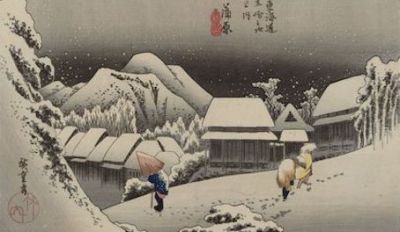
The Japanese master Andō Hiroshige (1797–1858) devoted his luminous vision to the Tōkaidō Road, transforming this vital artery of Edo-period Japan into a poetic procession of landscapes. In this winter scene, the season itself becomes a silent protagonist—snow settles gently upon villages and passes, softening the world while sharpening the human experience within it.
The Tōkaidō Road bound Edo (modern Tokyo) to the refined splendor of Kyoto, the imperial capital. More than a route of commerce and governance, it was a living corridor of stories, rituals, and fleeting encounters. Ukiyo-e artists intuitively grasped its symbolic power: by depicting the eastern sea route, they invited ordinary people to step into the rhythm of travel, aspiration, and transience that defined the floating world.
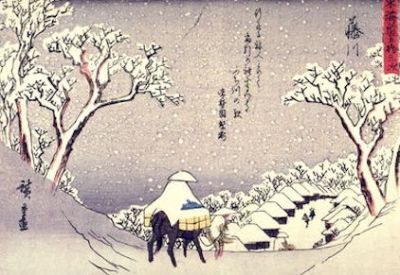
As the Princeton University Library observes, “Much like the fabled Route 66 in the United States, Tōkaidō Road was a 300-mile-long thoroughfare along Japan’s eastern seacoast. Its fifty-three stations or ‘rest stops’ were legendary destinations in and of themselves. ‘Armchair travelers’ could also experience the excitement of traveling the Tōkaidō vicariously through woodblock prints, books, and scrolls…”
Through Hiroshige’s eyes, these stations become meditative pauses—bridges veiled in snowfall, travelers bent against icy winds, distant mountains dissolving into mist. His compositions whisper rather than shout, allowing silence, space, and weather to speak with eloquence.
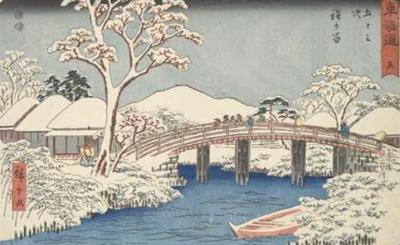
Hiroshige’s influence crossed oceans and centuries, shaping the visual imagination of artists far beyond Japan. Among those drawn into his world were Vincent van Gogh, Claude Monet, Édouard Manet, Paul Gauguin, Pierre Bonnard, Toulouse-Lautrec, and Mstislav Dobuzhinsky—each absorbing his mastery of atmosphere, asymmetry, and emotional restraint.
Ultimately, Hiroshige’s winter visions of the Tōkaidō offer more than aesthetic pleasure. They open a window onto the Edo period itself—revealing beauty tempered by endurance. Beneath the tranquil snows lie the hardships faced by workers, pilgrims, merchants, and local people, all moving through a landscape both serene and unforgiving. In this quiet tension between elegance and survival, Hiroshige’s genius endures.

Modern Tokyo News is part of the Modern Tokyo Times group
http://moderntokyotimes.com Modern Tokyo Times – International News and Japan News
http://sawakoart.com – Sawako Utsumi and her website – Modern Tokyo Times artist
https://moderntokyonews.com Modern Tokyo News – Tokyo News and International News
PLEASE JOIN ON TWITTER
https://twitter.com/MTT_News Modern Tokyo Times
PLEASE JOIN ON FACEBOOK
 Modern Tokyo News