Burkina Faso, Mali, and Niger Prepare Joint Operation against Islamists
Noriko Watanabe, Michiyo Tanabe, and Lee Jay Walker
Modern Tokyo Times
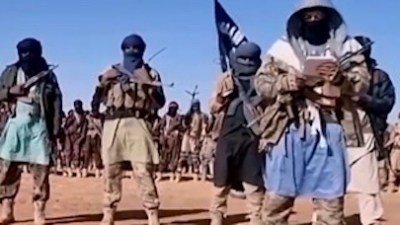
The Sahel has endured years of unrelenting upheaval—its lands scarred by internal political decay, regional fragmentation, the contested legacy of France, and the ever-expanding shadow of Sunni Islamist insurgencies. Nowhere is this turmoil more acute than in Burkina Faso, Mali, and Niger, where democracy has fractured, military rule has hardened, ethnic grievances have festered, and entrenched cronyism has hollowed out state authority. These internal convulsions are no longer episodic crises; they are corrosive forces eating away at the very foundations of national cohesion and radiating instability across borders.
In defiance of external pressure, Burkina Faso, Mali, and Niger have rejected the geopolitical authority of ECOWAS (Economic Community of West African States) and openly challenged France’s lingering colonial imprint across the Sahel. Their response was bold and symbolic: the formation of the Alliance of Sahel States and the demand for the withdrawal of French armed forces. Initially, this alliance carried the promise of renewed sovereignty and strategic independence. Yet the diplomatic rupture, regional isolation, and absence of sustained international solidarity have created openings that Islamist insurgent groups are now exploiting with deadly efficiency.
Earlier this week, the three states declared their intention to launch “large-scale operations in the coming days,” deploying a joint battalion alongside other military assets. The announcement underscores both resolve and urgency in a region where security forces are overstretched and time is no longer a luxury.
As AP News starkly reports, “Mali, Burkina Faso and Niger are the most affected as the vast Sahel region south of the Sahara has become the deadliest place in the world for extremism, with armed groups linked to al-Qaida and the Islamic State group. All three countries have seen coups in recent years and struggled with overstretched security forces.”
In Mali, the threat has grown more suffocating and immediate. The Islamic State Sahel Province (ISSP) and the more formidable Jama’at Nusrat al-Islam wal-Muslimin (JNIM) have imposed fuel and economic blockades around Bamako and other strategic arteries of the state. Unlike earlier phases of the conflict—when insurgent pressure was largely confined to the north and central regions—JNIM’s expanding reach now creeps dangerously toward the capital itself, signaling a profound escalation in intent and capability.
Meanwhile, in northern Mali, the Tuareg separatists of the Coordination of Azawad Movements (CMA) continue to articulate long-standing and legitimate grievances, adding another volatile layer to an already fractured national landscape.
This pattern of instability is mirrored in Burkina Faso and Niger, with Burkina Faso, in particular, confronting a security crisis that increasingly resembles Mali’s own descent. Entire regions slide beyond effective state control, civilians endure relentless violence and displacement, and governance erodes under the pressure of perpetual insecurity.
Beyond the immediate epicenter, neighboring states—Benin, Côte d’Ivoire, Ghana, Mauritania, Senegal, and Togo—observe developments in the Sahel with growing apprehension. Further east, the Lake Chad region remains a combustible hub of Islamist militancy. Armed groups originating in northern Nigeria—most notably Boko Haram and the Islamic State West Africa Province (ISWAP)—have metastasized across borders into Cameroon, Chad, and Niger. The spread of Takfiri Islamist ideology now threatens to ignite a wider regional conflagration, eroding stability throughout West Africa.
Abdourahamane Tchiani, the leader of Niger’s military junta, captured the alliance’s defiant posture when he declared that it had “put an end to all occupation forces in our countries.” While France is the principal focus of this rebuke, the message also extends—though more subtly—toward the United States.
Tchiani further asserted, “No country or interest group will decide for our countries anymore.”
Yet defiance alone cannot defeat transnational jihadist movements. The instability engulfing the Sahel is no longer a localized crisis; it is a regional fault line with consequences that extend far beyond Burkina Faso, Mali, and Niger. Continued fragmentation—political, economic, and diplomatic—only deepens insecurity and widens the operational space for Islamist insurgent groups.
Despite escalating tensions with ECOWAS and the profound diplomatic rift with France, it is incumbent upon the United States, ECOWAS, the European Union, and the G7 to pursue constructive engagement with Burkina Faso, Mali, and Niger. Such engagement must go beyond rhetoric, encompassing economic support, security assistance, and intelligence cooperation, while remaining anchored in respect for sovereignty and genuine dialogue.
Sustainable security in the Sahel will not be achieved through isolation or imposed solutions. It requires listening carefully to the voices emerging from Ouagadougou, Bamako, and Niamey—cities standing on the front lines of an existential struggle against extremism. Only by addressing the specific security and developmental needs of these states can the international community hope to curb terrorism and prevent further destabilization across the Sahel and Lake Chad regions.
Islamist movements thrive on division—feeding on sanctions, diplomatic paralysis, and political vacuums. A strategic reset is therefore essential: one that allows the current leaderships of Burkina Faso, Mali, and Niger to engage freely without coercive external interference. Continued isolation, economic punishment, and regional antagonism toward the Sahel alliance do not weaken extremism—they empower it. In the end, fragmentation serves only the insurgents, while stability demands engagement, realism, and a shared commitment to preventing the Sahel from sliding further into the abyss.

Modern Tokyo News is part of the Modern Tokyo Times group
http://moderntokyotimes.com Modern Tokyo Times – International News and Japan News
http://sawakoart.com – Sawako Utsumi’s website and Modern Tokyo Times artist
https://moderntokyonews.com Modern Tokyo News – Tokyo News and International News
PLEASE JOIN ON TWITTER
https://twitter.com/MTT_News Modern Tokyo Times
PLEASE JOIN ON FACEBOOK
 Modern Tokyo News