Alawite Mosque Attack and Protest Deaths in Syria
Kanako Mita, Murad Makhmudov, and Lee Jay Walker
Modern Tokyo Times

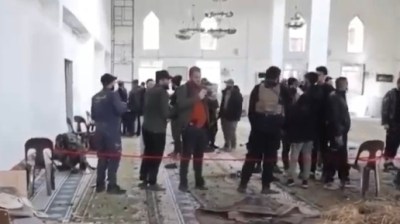
The recent attack on an Alawite mosque by Sunni Takfiri extremists once again exposes the profound fragility that defines post-war Syria. It is not an isolated outrage, but part of a widening pattern of sectarian violence that has intensified throughout 2025. Brutal pogroms carried out by extremist Sunni factions—including irregular militias, elements aligned with government forces, and Bedouin Sunni tribes—have disproportionately targeted Syria’s most vulnerable communities. Alawites and Druze have borne the brunt of this violence, while Christian communities, though also attacked, face a parallel campaign of intimidation and erasure. Together, these assaults mark a systematic unravelling of Syria’s pluralistic social fabric.
Yet, despite the mounting evidence of persecution, the plight of religious minorities—and the unresolved Kurdish Question—has been relegated to the margins of international concern. Gulf states and Western powers, through a calculated blend of diplomatic engagement, economic inducements, and political normalization, continue to prop up Islamist-leaning elites in Damascus. This support persists even as massacres of Alawites, attacks on Druze strongholds, and lethal assaults on Christian places of worship accumulate with grim regularity. In doing so, these external actors signal an unsettling willingness to accommodate, legitimize, and normalize the growing influence of Islamist power brokers within Syria’s governing structures.
The attack in Homs is emblematic of this descent. An Alawite mosque was deliberately targeted by Sunni Islamists, leaving at least eight people dead in a sectarian terrorist atrocity. The symbolism could not be clearer: a sacred space, attacked precisely because of the identity of those who worshipped within it. Predictably, Alawite communities mobilized in protest, driven by grief, fear, and accumulated rage. Yet even these expressions of anguish were met with hostility. Counterdemonstrations erupted, marked by open contempt toward Alawites, and violence followed—claiming four more lives and underscoring how deeply sectarian hatred has penetrated the social bloodstream.
As reported by ABC News, responsibility for the mosque attack was claimed by a little-known group calling itself Saraya Ansar al-Sunna, which openly declared that its objective was to strike members of the Alawite sect—whom hard-line Islamists denounce as apostates.
AP News further notes that this same group previously claimed a suicide attack on a Greek Orthodox church in Dweil’a, near Damascus, where 25 worshippers were killed during Sunday prayers. The continuity is unmistakable: churches, mosques, and minority sanctuaries are no longer collateral victims of chaos, but primary targets in a campaign of ideological purification.
Across coastal regions such as Tartous and Latakia, Alawite communities express growing despair and fury at their ongoing persecution, abandonment, and isolation. Their sense of betrayal mirrors that of the Druze in Sweida (Suweida), who remain deeply distrustful of Sunni Islamist elites in Damascus and fear that any accommodation with such forces will come at the expense of their security, autonomy, and very existence.
Under these conditions, the moral posture of the United States, the European Union, the Gulf states, Turkey, and the United Kingdom is indefensible. Their overtures to Sunni Islamist elements in Damascus—actors who govern through fear, coercion, and sectarian manipulation—constitute a profound moral collapse. In pursuit of short-term leverage and geopolitical convenience, these powers have abandoned the minorities who once embodied Syria’s plural, tolerant, and multi-confessional heritage. This is not realpolitik alone; it is complicity through calculated silence.
Today, religious minorities, secularists, Kurds, and other vulnerable communities face an existential threat under the tightening grip of Sunni Islamist domination. Churches that survived a decade of war, Druze shrines that anchored local identity, Alawite neighborhoods that once formed the backbone of coastal society, and secular enclaves that resisted radicalization—all now stand at the precipice.
Meanwhile, the Kurds—overwhelmingly Sunni Muslim themselves—observe these developments with acute alarm. For years, Kurdish forces served as a bulwark against extremist Sunni Islamist movements, often at great human cost. Now, abandoned by many of their former allies, Kurdish leaders fear they will be next. For Kurdish communities, the continued presence of their military forces is not merely strategic; it is existential. It represents survival, dignity, and resistance in a political landscape increasingly hostile to autonomy, federalism, and minority self-governance.
Syria’s tragedy is no longer confined to the battlefield. It is unfolding in mosques and churches, in funerals and protests, in the quiet terror of communities who know they are expendable in the eyes of global power brokers.
And so the question remains—cold, unavoidable, and damning: why is the international community abandoning Syria’s religious mosaic to those who seek to erase it?

Modern Tokyo News is part of the Modern Tokyo Times group
http://moderntokyotimes.com Modern Tokyo Times – International News and Japan News
http://sawakoart.com – Sawako Utsumi and her website – Modern Tokyo Times artist
https://moderntokyonews.com Modern Tokyo News – Tokyo News and International News
PLEASE JOIN ON TWITTER
https://twitter.com/MTT_News Modern Tokyo Times
PLEASE JOIN ON FACEBOOK
 Modern Tokyo News