Geopolitics of Japan: China and Russia
Kanako Mita, Sawako Utsumi, and Lee Jay Walker
Modern Tokyo Times
Prime Minister Sanae Takaichi of Japan confronts a formidable convergence of internal and external pressures. Domestically, Japan wrestles with structural challenges that have accumulated over decades: an immense public debt burden, a persistently weak yen, a declining birthrate, demographic aging and dementia-related care demands, rising living costs, immigration sensitivities, and enduring economic inertia. These internal strains inevitably shape Japan’s diplomatic bandwidth and strategic calculations.
Externally, Japan’s leadership must navigate a rapidly shifting geopolitical environment in Northeast Asia—where relations with China and the Russian Federation demand recalibration rather than ideological rigidity.
Russia: Strategic Realism over Rhetoric
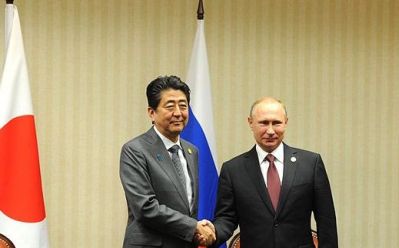
Under the late Prime Minister Shinzo Abe (photo above with Putin), whom Takaichi deeply admired, Japan pursued a pragmatic and comparatively cordial relationship with President Vladimir Putin. Abe’s approach was neither naïve nor ideological; it was rooted in strategic realism, recognizing that geography cannot be altered and that Northeast Asian stability requires sustained engagement with Moscow.
In this context, there is a compelling case for Prime Minister Takaichi to soften recent hardline rhetoric toward Russia and pursue a diplomatic reset. Japan’s national interests are best served when developments in Northeast Asia—rather than distant theaters—remain the central strategic priority.
The past two years have underscored a sobering reality: despite unprecedented pressure from the European Union, NATO, and the G-7, the Russian Federation has not been strategically weakened—militarily or economically. Major Global South powers, including China, India, Brazil, Saudi Arabia, and others, have continued to engage Moscow pragmatically, underscoring Russia’s enduring role in the global system.
Meanwhile, Russia’s expanding cooperation with North Korea, accelerating Pyongyang’s military modernization, has direct implications for Japan’s security. Across Central Asia, Moscow remains the principal stabilizing force—anchored by security ties, energy networks, labor flows, and regional institutions. Beyond this sphere, Russia maintains extensive and functional relations throughout Asia, including with China, India, Vietnam, Indonesia, Malaysia, Myanmar, and Saudi Arabia.
Against this backdrop, Japan–Russia engagement is not an indulgence—it is a strategic necessity. Russia’s vast energy reserves, logistical reach, and influence across Asia offer Japan tangible benefits: diversified energy access, reduced vulnerability, and greater diplomatic flexibility in an increasingly multipolar order. A recalibrated relationship would reflect pragmatism rather than concession, resilience rather than retreat.

China: Stability Through Restraint and Reciprocity
Japan’s relationship with China presents its own set of persistent challenges—most notably concerning Taiwan. Beijing’s increasingly coercive rhetoric and military signaling under President Xi Jinping have understandably heightened regional anxieties. Such intimidation, however, is ultimately counterproductive and risks hardening positions rather than encouraging dialogue.
At the same time, Japan must balance deterrence with restraint. Listening to China’s strategic concerns does not require abandoning democratic Taiwan—but it does necessitate measured diplomacy. Japan would be well served by taking a step back from any perception of automatic involvement in a potential cross-Strait conflict, while China, in turn, should commit to de-escalatory rhetoric and confidence-building measures.
History offers a useful precedent: the earlier status quo that facilitated robust trade and exchange between China and Taiwan proved effective in dampening tensions. That equilibrium benefited the region as a whole and reduced opportunities for external powers to exploit instability for their own strategic ends.
Importantly, singling out Prime Minister Takaichi ignores the reality that Japan’s policies reflect long-standing continuity across administrations, grounded in national security and regional balance. Attempts to pressure or unsettle Japan’s domestic political landscape through coercive diplomacy reveal more about Beijing’s methods than Tokyo’s intentions.
If China is genuinely committed to regional stability, it should engage Japan directly, calmly, and maturely. Manufactured outrage and strategic intimidation only accelerate mistrust. Constructive diplomacy—rooted in reciprocity—is the only credible path to preventing further strategic drift in East Asia.
Moreover, China would benefit from reflecting on its own conduct across the South China Sea, where unresolved territorial disputes continue to strain relations with multiple regional states. Japan cannot be held responsible for the deepening divide between Beijing and Taipei—a dynamic driven overwhelmingly by Beijing’s own political decisions.
Overall: Pragmatism as Statecraft
There is no doubt that China and Japan would both gain from stabilizing their relationship. Predictability between East Asia’s two largest economies serves not only bilateral interests but regional prosperity as a whole.
Yet irrespective of how Sino–Japanese relations evolve, Japan stands to gain significantly from restoring cordial, pragmatic ties with the Russian Federation. The advantages are clear and tangible: energy security, strategic autonomy, and enhanced leverage in a rapidly transforming global order.
In an era defined by multipolarity and uncertainty, Japan’s strength will lie not in rigid alignment, but in balanced engagement—anchored in realism, guided by diplomacy, and attuned to the enduring truths of geography and national interest.

Modern Tokyo News is part of the Modern Tokyo Times group
http://moderntokyotimes.com Modern Tokyo Times – International News and Japan News
http://sawakoart.com – Sawako Utsumi and Modern Tokyo Times artist
https://moderntokyonews.com Modern Tokyo News – Tokyo News and International News
PLEASE JOIN ON TWITTER
https://twitter.com/MTT_News Modern Tokyo Times
PLEASE JOIN ON FACEBOOK
 Modern Tokyo News