Japanese Art and Itō Nisaburō
Lee Jay Walker
Modern Tokyo Times
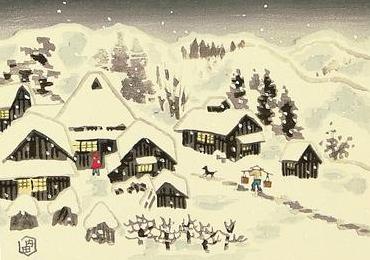
The Japanese artist Itō Nisaburō was born in 1910, in the fading twilight of the Meiji Restoration, when Japan still breathed the fragrance of old Kyoto even as it hurried toward modernity. Shaped by family, tradition, and the ancient cultural heartbeat of Kyoto itself, Itō grew up immersed in a world where refinement, ritual, and beauty were not abstractions, but daily companions. From an early age, he absorbed the quiet authority of high culture and the subtle discipline of the arts.
Within this fertile artistic atmosphere, Itō devoted himself to shin-hanga, the “new prints” movement that sought to revive ukiyo-e through modern sensibility while preserving classical elegance. Kyoto, during the 1930s and 1940s, was a radiant constellation of shin-hanga talent, and Itō stood among distinguished contemporaries such as Asada Benji, Hasegawa Konobu (Sadanobu), Eiichi Kotozuka, and Tokuriki Tomikichirō. Together, they transformed the ancient city into a living atelier, where tradition and innovation brushed against each other like ink on silk.
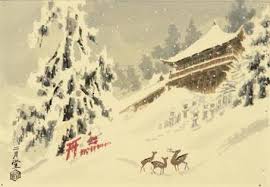
Itō’s prints possess a tender charm—often described as adorable, yet underpinned by deep technical mastery and emotional resonance. His colors sing softly but with conviction. These contrasting hues—bold and subtle, sacred (religious theme above) and seasonal—reveal an artist attuned to the rhythms of both nature and spirit.
The art piece above is the Nigatsu-dō – a vibrant structure of the Todai-ji Buddhist Temple compound in the city of Nara. The Todai-ji website says, “The name Nigatsu-dō, or Second Month Hall is derived from the fact that the Shuni-e Ceremony is held here during the second month of the lunar calendar. The structure is said to have been first erected by the monk Jitchū (fl. 760-820), Rōben’s chief disciple. In 1667, however, a fire broke out inside the hall in the midst of the ceremony, and the original was destroyed. The present building is a reconstruction of 1669.”
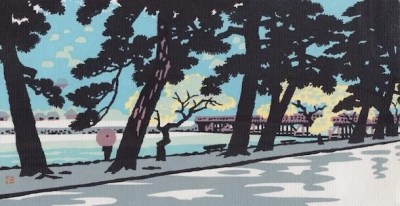
Even after the trauma of war, Itō did not retreat into repetition. Instead, he continued to evolve, allowing his art to mature, deepen, and respond to a changing Japan. Yet through all transformation, one quality remained constant: a palpable passion, a warmth that flows from his images into the heart of the viewer.

To encounter Itō’s work is to glimpse a delightful aspect of Japan itself—its shrines and seasons, its quiet streets and shifting light—preserved not as mere scenery, but as living poetry carved into wood and color.

Modern Tokyo News is part of the Modern Tokyo Times group
http://moderntokyotimes.com Modern Tokyo Times
http://sawakoart.com – Sawako Utsumi and Modern Tokyo Times artist
https://moderntokyonews.com Modern Tokyo News – Tokyo News and International News
PLEASE JOIN ON TWITTER
https://twitter.com/MTT_News Modern Tokyo Times
PLEASE JOIN ON FACEBOOK
 Modern Tokyo News