Japan Art and Kato Tetsunosuke
Lee Jay Walker
Modern Tokyo Times
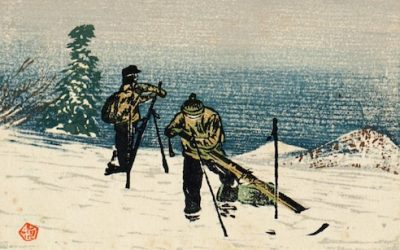
The Japanese artist Kato Tetsunosuke remains a figure glimpsed only in half-light. Active between roughly 1925 and 1950, his name survives not through biography or manifesto, but through scattered impressions—minor references preserved largely in English-language sources, like footprints left in snow and slowly softened by time.
He is thought to have been born during the Meiji period, a generation shaped by transition, and to have reached artistic awareness as Japan edged toward modernity. His early formation unfolded during the Taishō era (1912–1926), a moment of openness and experiment, when new ideas flowed easily between Japan and the wider world. While faint traces of his activity appear in the late Taishō years, it is the Shōwa era that reveals the full quiet confidence of his vision, when his artistic voice settled into maturity.
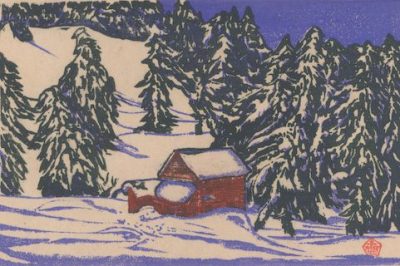
The surviving works of Tetsunosuke are intimately connected with the Sapporo Tourist Association, which issued many of his woodblock prints and finely crafted postcards. These were far more than promotional souvenirs. They are meditations on place—small, carefully composed windows into atmosphere, climate, and regional identity, created with a sensitivity that elevates the everyday into the poetic.
His visions of Hokkaidō are marked by restraint and clarity. Snow-covered plains breathe with stillness; distant mountains recede into pale air; wide northern skies seem to hover in contemplative silence. Within these landscapes, Tetsunosuke also turns his attention toward the Ainu, the indigenous people of the region. Several postcards depict Ainu crafts, offering a gentle yet meaningful acknowledgment of a culture too often overlooked, and subtly entwining human memory with the land itself.
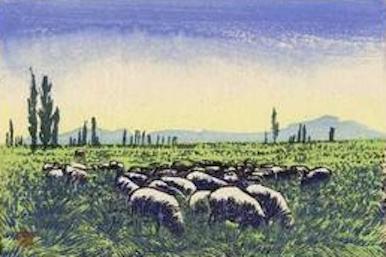
Artistically, Tetsunosuke is aligned with the sōsaku hanga (creative prints) movement, which prized personal expression and demanded the artist’s direct involvement at every stage of creation. American sources further suggest that he worked in watercolor—a claim that feels entirely convincing, given the tonal softness, spatial balance, and quiet lyricism that permeate his printed works.
Taken together, Kato Tetsunosuke’s sōsaku hanga prints and postcards form a body of work of understated grace. Through them, Hokkaidō reveals itself slowly and without spectacle—its snow, sky, and silence filtered through a sensibility attuned to nuance rather than drama. In their calm restraint, these works offer not only images of a place, but an invitation to linger within its quiet grandeur.

Modern Tokyo News is part of the Modern Tokyo Times group
http://moderntokyotimes.com Modern Tokyo Times – International News and Japan News
http://sawakoart.com – Sawako Utsumi’s website and Modern Tokyo Times artist
https://moderntokyonews.com Modern Tokyo News – Tokyo News and International News
PLEASE JOIN ON TWITTER
https://twitter.com/MTT_News Modern Tokyo Times
PLEASE JOIN ON FACEBOOK
 Modern Tokyo News