Japanese Art and Suzuki Shônen (Edo, Meiji, and early Taisho)
Lee Jay Walker
Modern Tokyo Times
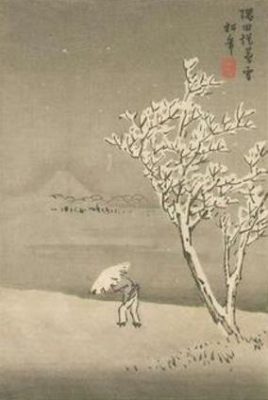
Suzuki Shônen was born in the waning glow of the Edo world, sometime in the 1840s, and departed this life in 1918, just as the Taishō era was gathering its forward momentum. His years unfolded across one of Japan’s most profound thresholds, when inherited certainties quietly dissolved and unfamiliar horizons shimmered into view. It was within this shifting light that Shônen’s artistic spirit awakened and matured, shaped by both reverence for the past and curiosity for what lay ahead.
From his earliest days, his father’s hand guided his own—steady, disciplined, and steeped in tradition. Yet this inheritance was never merely technical. It carried with it a sensitivity to lineage, place, and memory. The refined cultural cadence of Kyoto, the ascetic stillness of Kōyasan, the ancient gravitas of Nara, and the distant, resonant echoes of the Middle Kingdom all left subtle impressions upon his brush. These influences did not overwhelm him; rather, they gathered quietly, forming a layered soil from which his own vision could grow.
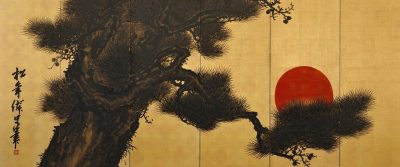
Though nurtured within his father’s artistic discipline, Shônen did not remain in its shadow. His brush gradually leaned toward independence, searching for rhythms and forms that bore his unmistakable presence. In Kyoto and its surrounding cultural sanctuaries, he forged bonds with fellow painters—relationships defined not by imitation, but by dialogue. Within this circle, shared spirit and individual voice existed in a delicate, productive tension, sharpening each artist’s resolve while deepening their mutual respect.
The Metropolitan Museum of Art observes: “Together with his father, Suzuki Hyakunen, Shônen was one of the leading painters active in Kyoto during the Meiji period…”
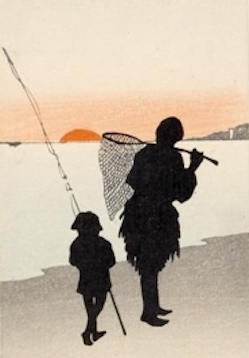
Like many of Japan’s most gifted artists, Shônen drank deeply from native traditions while attentively studying the venerable legacy of China. Yet his genius lay in discernment. Nothing was borrowed without reflection; nothing absorbed without transformation. Each influence was weighed, softened, or sharpened according to the needs of the moment. Thus, every work became a quiet meeting place—where ancestral wisdom, foreign resonance, and Shônen’s own creative intuition converged in a poised and lasting harmony.

http://moderntokyotimes.com Modern Tokyo Times – International News and Japan News
http://sawakoart.com – Sawako Utsumi’s website and Modern Tokyo Times artist
https://moderntokyonews.com Modern Tokyo News – Tokyo News and International News
PLEASE JOIN ON TWITTER
https://twitter.com/MTT_News Modern Tokyo Times
PLEASE JOIN ON FACEBOOK
 Modern Tokyo News