Afghanistan and Domestic Violence (Sharia): UK and Women
Noriko Watanabe, Michiyo Tanabe, and Lee Jay Walker
Modern Tokyo Times
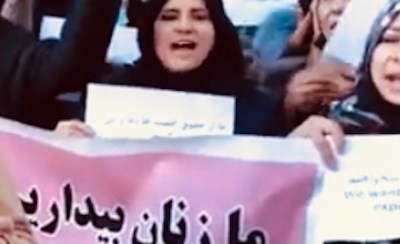
The United Nations stated unequivocally in 2024 that women fleeing domestic violence in Afghanistan were being incarcerated—not as offenders, but ostensibly for their “protection.” Since then, the situation confronting Afghan women and girls has deteriorated further. By 2026, their daily lives remain constrained by an increasingly rigid framework of governance rooted in extreme interpretations of Sharia law, severely curtailing freedom of movement, education, employment, and legal autonomy.
This crisis does not exist in isolation. In neighboring Iran, young women—and others—have lost their lives at the hands of the so-called “morality police,” victims of state-enforced dress codes upheld by entrenched political and religious elites. Similarly, in Yemen, the practice of child marriage persists, binding young girls to adult men with lifelong consequences. Likewise, in Pakistan, non-Muslim girls from Christian, Hindu, and Sikh communities continue to face forced conversions and marriages—an abuse the UN has explicitly condemned for its persistence and inadequate state response.
Taken together, the Afghan tragedy serves as a stark reminder of a wider pattern: where extremist ideologies or rigid legal structures prevail, women and girls are often the first to lose their rights, dignity, and safety.
A UN fact-finding report previously warned: “The confinement of women in prison facilities, outside the enforcement of criminal law, and for the purpose of ensuring their protection from gender-based violence, would amount to an arbitrary deprivation of liberty.”
Violence against women in Afghanistan predates the return to power of the Taliban. Estimates once suggested that up to 90 percent of Afghan women experienced physical or psychological abuse during their lifetime. Under current conditions—where legal safeguards have largely vanished—one can only imagine the heightened vulnerability now endured by women and girls across the country.
It is equally important to recognize that violence against women is a global failure, not confined to any single culture, religion, or region. In the United Kingdom, for example, conviction rates for rape remain low, prosecutions related to female genital mutilation are exceedingly rare, and Pakistani Muslim grooming gangs that raped native working-class British girls was tolerated for may years by the institutions of this nation—reflecting systemic legal and political shortcomings.
Yet a critical distinction remains: in Afghanistan, Iran, and similar contexts, persecution is not merely tolerated but actively embedded within state policy and enforcement.
Investigative reporting underscores the gravity of this reality. The Independent (Afghan Witness, 2023)documented 188 cases nationwide within an 18-month period, including beheadings, shootings, stabbings, and bodies discarded in public spaces—often bearing signs of torture or suffocation. UN News further reported that mechanisms enabling legal redress and protection for victims have “all but disappeared” since the Taliban takeover.
The UN also noted with alarm that some de facto officials described women’s prisons as a place of “protection” for survivors of abuse—equating them with facilities used to house drug addicts or homeless individuals in Kabul. Meanwhile, CBS News has confirmed that girls are barred from education beyond the sixth grade and that women may not travel without a male guardian.
Violence against women is a universal challenge demanding universal resolve. Yet where governments actively enforce repression—or choose to tolerate it—the international community has a heightened moral and legal obligation to speak with clarity and act with consistency. Protecting women and girls is not a cultural concession; it is a fundamental measure of justice, humanity, and the rule of law.
The suffering of women and girls—whether under the weight of draconian legal systems or through the quiet erosion of justice in established democracies—demands moral consistency, not selective outrage. In Afghanistan, state power is openly deployed to restrict, punish, and silence women through rigid interpretations of religious law. In the United Kingdom, failures are less overt but no less damaging, where political caution, legal inertia, and institutional weakness too often deny women and girls the protection they are promised.
The international community must therefore move beyond statements of concern and adopt a posture of sustained accountability—pressing governments to reform laws that degrade women, strengthening legal mechanisms that protect victims, and refusing to excuse abuse under the guise of culture, tradition, or political expediency.
The measure of any society is not found in its rhetoric, but in how it safeguards the most vulnerable. Until women and girls can live free from fear—whether in Kabul, London, or beyond—the promise of justice remains unfulfilled, and the responsibility to speak out remains absolute.

Modern Tokyo News is part of the Modern Tokyo Times group
http://moderntokyotimes.com Modern Tokyo Times – International News and Japan News
http://sawakoart.com – Sawako Utsumi’s website and Modern Tokyo Times artist
https://moderntokyonews.com Modern Tokyo News – Tokyo News and International News
PLEASE JOIN ON TWITTER
https://twitter.com/MTT_News Modern Tokyo Times
PLEASE JOIN ON FACEBOOK
 Modern Tokyo News