Ayatollah Khamenei Killed by America and Israel (Regional Tensions)
Kanako Mita, Sawako Utsumi, and Lee Jay Walker
Modern Tokyo Times
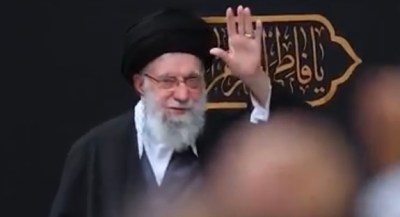
Prime Minister Benjamin Netanyahu of Israel and President Donald Trump of the United States have ordered extensive military strikes against Iran, marking a dramatic and dangerous escalation in regional tensions. Among those reportedly targeted was Iran’s Supreme Leader, Ali Khamenei, alongside other senior political and military figures. If confirmed, such developments would represent a seismic shift in the geopolitical architecture of West Asia.
The reported death of Khamenei would underscore a profound breach within Iran’s security establishment. In recent years, Israel has demonstrated a consistent capability to conduct high-precision, intelligence-driven operations against senior figures linked to Hamas and Hezbollah. The cumulative impact of these operations — now reportedly extending deep into Iran’s own leadership — inevitably raises questions about the resilience, cohesion, and counter-intelligence capacity of Tehran’s national security apparatus.
Tehran has responded with retaliatory strikes against Israeli targets, American military interests across the region, and sites within Gulf Arab states. However, while Iran retains significant asymmetric capabilities — including drones, ballistic missiles, and regional proxy networks — its conventional reach does not match the combined military weight of the United States and Israel. The result has been a cycle of escalation in which senior Iranian elites appear increasingly vulnerable to targeted operations.
The United Arab Emirates stated that its air defense systems intercepted 152 of 165 ballistic missiles launched by Iran, with the remainder reportedly falling harmlessly into the sea. Two cruise missiles were also said to have been neutralized. If accurate, this suggests both the scale of Iran’s retaliatory intent and the defensive preparedness of Gulf states wary of being drawn directly into confrontation.
Ali Larijani, head of Iran’s National Security Council, attempted to draw a distinction between targeting American military assets and targeting host nations. He stated that U.S. bases “are not the territory of the countries of the region, they are the territory of the United States,” adding that Iran does not intend to attack regional governments themselves. Nevertheless, Iranian drones and missiles have reportedly struck or approached sites in Bahrain, Jordan, Qatar, Saudi Arabia, the UAE, and Israel — illustrating how quickly conflict boundaries can blur in practice.
According to reporting cited by CNN, the Israel Defense Forces stated it had eliminated 40 senior commanders in what it described as a “historic strike,” enabled by high-grade intelligence and simultaneous targeting of multiple sites. Israel has also resumed bombing operations in Beirut and other parts of Lebanon after Hezbollah entered the conflict. In 2024, Israel conducted extensive targeted strikes against Hezbollah’s upper echelon, including the killing of its longtime clerical leader, Hassan Nasrallah.
The Times of Israel reports that Hezbollah’s current chief, Naim Qassem, vowed confrontation with Israel and the United States despite appeals from the Lebanese government to remain outside the widening war. This dynamic risks further destabilizing Lebanon, which remains economically fragile and politically divided.
President Trump has framed Washington’s objective in unequivocal terms: preventing Iran from acquiring a nuclear weapon. He has declared that the United States intends to dismantle Iran’s missile capabilities entirely and has coupled military pressure with rhetorical support for political change inside Iran. His comments urging Iranians to “take over your government” suggest that regime transformation — whether explicit policy or emergent consequence — is increasingly central to Washington’s posture.
For Israel, long wary of Iran’s nuclear ambitions and regional influence, weakening or reshaping the Iranian regime has long been viewed by some policymakers as strategically desirable. The convergence of American and Israeli positions at this juncture signals a moment of extraordinary volatility.
Yet the stakes extend far beyond the immediate combatants. Energy security, maritime routes, civilian safety, and regional stability all hang in the balance. Gulf monarchies seek to avoid being battlegrounds for great-power rivalry. Lebanon faces renewed devastation. Jordan and other neighbors tread a precarious line between deterrence and entanglement.
The conflict remains in its early stages, and its trajectory is uncertain. Military escalation carries profound risks of miscalculation. Diplomatic off-ramps, however difficult to construct, will require credible intermediaries and a willingness among adversaries to define achievable objectives.
The region stands on edge. Whether this crisis hardens into prolonged war or pivots toward negotiation will depend on restraint, strategic clarity, and the emergence of actors capable of bridging deep ideological and security divides.

Modern Tokyo News is part of the Modern Tokyo Times group
http://moderntokyotimes.com Modern Tokyo Times – International News and Japan News
http://sawakoart.com – Sawako Utsumi’s website and Modern Tokyo Times artist
https://moderntokyonews.com Modern Tokyo News – Tokyo News and International News
PLEASE JOIN ON TWITTER
https://twitter.com/MTT_News Modern Tokyo Times
 Modern Tokyo News