Israel Intensifies Attacks against Iran and Hezbollah in Lebanon
Kanako Mita, Sawako Utsumi, and Lee Jay Walker
Modern Tokyo Times
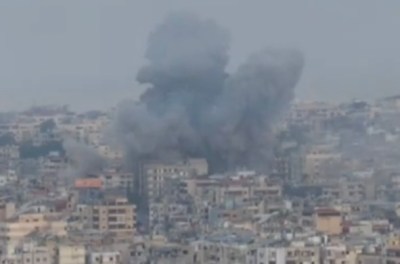
The Israel Defense Forces (IDF) and the Israel Air Force (IAF) remain intent on systematically degrading the military capabilities of Iran and its principal regional proxy, Hezbollah in Lebanon. In parallel with targeting missile infrastructure and strategic assets, Israel has intensified its campaign against senior leadership figures — including the reported killing of Ali Khamenei, Iran’s Supreme Leader.
Hezbollah, despite years of confrontation with Israel, continues to operate from a position of diminished strength within Lebanon. The 2024 killing of Hassan Nasrallah — alongside numerous senior Hezbollah officials — dealt a profound blow to the organization’s command structure. Yet the group persists in aligning itself closely with Tehran’s strategic objectives.
The present crisis traces its origins to the seismic events of October 7, 2024, when Hamas and allied Palestinian militant factions carried out atrocities that many observers compared to the brutality associated with Islamic State (ISIS), particularly its crimes against Yazidi women in Iraq. Unlike the Yazidis — who possessed no meaningful means of defense — Israel responded with overwhelming force. The IDF framed its campaign as a necessary act of national defense, aimed at protecting all Israeli citizens, irrespective of whether they are Jewish, Druze, Arab Christian, Arab Muslim, secular, or otherwise.
In the aftermath, Prime Minister Benjamin Netanyahu declared that Israel’s war effort was launched “to roll back the Iranian threat to Israel’s very survival.” Current hostilities are therefore widely seen as a continuation of the convulsions that began in 2024, set against a longer historical backdrop of deep hostility between Israel and the Iranian regime — including Tehran’s longstanding reliance on proxy forces committed to Israel’s destruction.
Israel asserts that it has struck approximately 300 Iranian missile launchers and key military installations since the latest escalation began, including cruise and ballistic missile sites, as well as air defense systems. According to reporting by The Times of Israel, the Israeli Air Force has intercepted more than 100 drones launched from Iran, releasing footage that shows fighter jets and helicopters carrying out the interceptions.
Iran, while lacking the advanced military reach of the United States and Israel, continues to retaliate. Reports indicate that at least 500 Iranian ballistic missiles and more than 2,000 drones have been launched toward Israel, Gulf Arab states, and American targets across the region.
Israel’s Defense Minister, Israel Katz, adopted uncompromising language, stating that any leader appointed by Tehran to pursue plans aimed at Israel’s destruction, threaten the United States and regional states, or oppress the Iranian people “will be an unequivocal target for elimination.”
In Washington, U.S. Defense Secretary Pete Hegseth declared that he stood before the public with “one unmistakable message” regarding Operation Epic Fury, underscoring American resolve.
President Donald Trump has articulated Washington’s objective in stark terms: preventing Iran from acquiring a nuclear weapon. He has pledged to dismantle Iran’s missile capabilities and has paired military pressure with rhetorical encouragement for political change within Iran. His public remarks urging Iranians to “take over your government” suggest that regime transformation — whether as formal policy or as an emergent consequence of sustained pressure — is increasingly central to American strategic thinking.
For Israel, long wary of Iran’s nuclear ambitions and expansive regional influence, the weakening — or reshaping — of the Iranian regime has been viewed by some policymakers as strategically advantageous. The convergence of American and Israeli positions at this volatile juncture marks a moment of extraordinary regional uncertainty.
The Iranian regime — long criticized internationally for severe human rights abuses, including the repression of women, persecution of minorities, and lethal crackdowns on protest movements — now confronts what may be the most serious challenge to its survival since its establishment. Whether this confrontation results in deterrence, transformation, or wider war remains uncertain, but the stakes are unmistakably historic.

Modern Tokyo News is part of the Modern Tokyo Times group
http://moderntokyotimes.com Modern Tokyo Times – International News and Japan News
http://sawakoart.com – Sawako Utsumi’s website and Modern Tokyo Times artist
https://moderntokyonews.com Modern Tokyo News – Tokyo News and International News
PLEASE JOIN ON TWITTER
https://twitter.com/MTT_News Modern Tokyo Times
 Modern Tokyo News