Gulf Nations Alarmed by Iran (US and Israel)
Murad Makhmudov, Noriko Watanabe, and Lee Jay Walker
Modern Tokyo Times
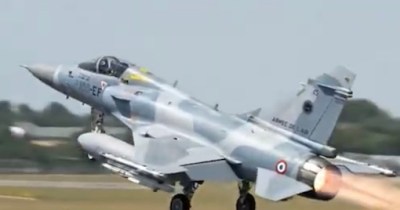
The Israel Defense Forces (IDF) and the Israeli Air Force (IAF), alongside the armed forces of the United States, are intent on systematically degrading the military capabilities of Iran. At the same time, Israel is concentrating heavily on weakening Tehran’s principal regional proxy, Hezbollah in Lebanon. However, since the crisis erupted, Iran’s widening military strikes against Gulf nations—and even states further afield such as Azerbaijan, Cyprus, and Turkey—have hardened resolve throughout the Gulf against the Iranian leadership.
The killing of Ayatollah Ali Khamenei, Iran’s Supreme Leader, by Israel has further intensified the crisis. Accordingly, the killing of Ayatollah Khamenei and the ongoing bombing campaign by America and Israel – tied to internal convulsions within Iran – have coincided with an escalation of Iranian retaliation. This notably concerns the military assets of America in the Gulf region and direct Iranian attacks against Israel.
Against this volatile backdrop, the Defense Minister of Saudi Arabia, Khalid bin Salman, met his counterpart from the United Arab Emirates, Hamdan bin Mohammed Al Maktoum, in discussions focused squarely on regional security. Their meeting reflected a broader concern shared across the Gulf: the urgent need to strengthen collective defenses against Iran’s military adventurism.
Both ministers condemned Iran’s actions as violations of international norms and reiterated that Tehran’s attacks threaten the “sovereignty, security, and safety of nations” throughout the Gulf region. Echoing these concerns, the Dubai Media Office warned that such actions carry serious implications for regional and global stability.
Elsewhere, Qatar—like several of its neighbors—has been forced to intercept Iranian attacks while simultaneously protecting American military facilities on its territory. The Qatari Foreign Ministry confirmed that the country’s air defenses successfully intercepted a drone targeting Al Udeid Air Base, the largest U.S. military installation in the Middle East.
The spokesperson for Qatar’s Foreign Ministry, Majed Al Ansari, spoke bluntly about the gravity of the situation: “All the red lines have already been crossed.”
He continued: “There are attacks on infrastructure. There are attacks on our residential areas. And the effects of these attacks are very clear. When it comes to possible retaliation, all options are with our leadership. But we have to make it very clear that attacks like these will not go unanswered and cannot go unanswered.”
The six members of the Gulf Cooperation Council—Bahrain, Kuwait, Oman, Qatar, Saudi Arabia, and the United Arab Emirates—met last Sunday to demonstrate solidarity. Collectively, they pledged to “take all necessary measures” to defend their territories, citizens, and residents, including the option of responding directly to Iranian aggression.
Strategically, Iran understands its own military limitations. Direct strikes on the American mainland are nigh impossible. However, American military bases scattered throughout the Gulf region remain within range of Iranian drones and missiles. Likewise, Israel is within the reach of Iran’s military capability (even if being degraded by America and Israel).
Tehran also fully understands the strategic importance of the Strait of Hormuz, a narrow maritime artery through which a significant portion of the world’s oil and gas flows. Even if Iran cannot permanently close this vital waterway, it retains the ability to threaten shipping and disrupt global energy markets, thereby increasing pressure on the international community.
For Iran, prolonging the conflict may serve a strategic purpose: encouraging global powers to pressure Washington and Jerusalem toward de-escalation.
Israel, by contrast, appears to be calculating that sustained military pressure—combined with long-standing internal discontent inside Iran—might eventually weaken or even collapse the Iranian regime.
The ultimate objectives of Donald Trump remain less clear, particularly following his recent diplomatic maneuvers involving Venezuela’s leadership. Nevertheless, one reality is becoming increasingly apparent.
Through its widening military campaign across the Gulf, Iran risks deepening its regional isolation. Nations that once attempted to balance diplomacy with caution now find themselves increasingly aligned against Tehran’s actions.

Modern Tokyo News is part of the Modern Tokyo Times group
http://moderntokyotimes.com Modern Tokyo Times – International News and Japan News
http://sawakoart.com – Sawako Utsumi’s website and Modern Tokyo Times artist
https://moderntokyonews.com Modern Tokyo News – Tokyo News and International News
PLEASE JOIN ON TWITTER
https://twitter.com/MTT_News Modern Tokyo Times
 Modern Tokyo News