Afghanistan and Pakistan Military Clashes: UN Calls for Dialogue
Kanako Mita, Sawako Utsumi, and Lee Jay Walker
Modern Tokyo Times
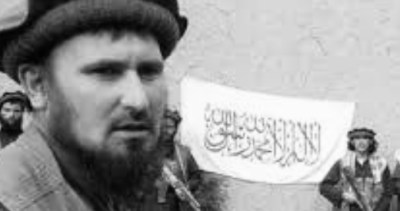
Pakistan launched air strikes deep inside Afghanistan in late February, marking a serious escalation in already fragile bilateral relations. The operation appears to be a calculated military move by Islamabad, reflecting mounting security concerns along one of the most volatile frontiers in the region. Pakistani officials stated that the strikes targeted entrenched Islamist militant positions accused of using Afghan territory as a launchpad for deadly attacks inside Pakistan. According to Islamabad, the objective was to dismantle extremist camps operating along the porous frontier that has long served as a corridor for insurgent networks.
The United Nations has voiced alarm over the crisis, especially at a time when other conflicts — from Myanmar to Sudan— are already straining global humanitarian resources. Volker Türk, the UN High Commissioner for Human Rights, urged both sides to step back from military escalation and instead pursue dialogue.
According to UN reporting, the humanitarian consequences are already severe. UN News stated that since the recent intensification of hostilities, 56 Afghan civilians — including 24 children and six women — have been killed, while 129 people have been injured. Up to 66,000 people have also been displaced by the fighting.
Some observers believe the true toll may be higher, given the limited information released by both sides. Military casualties also remain unclear.
Türk warned that civilians are paying the highest price for the conflict, stating that people on both sides of the border are fleeing airstrikes, artillery fire, mortar shelling, and gunfire. He urged all parties to end the violence and prioritise humanitarian assistance for those facing extreme hardship.
Initial Pakistani strikes reportedly targeted Afghan military installations in Kabul and Kandahar, along with other locations across the country. The scale of the operation highlights the seriousness with which Pakistan views the militant threat emanating from across the border.
At the heart of the dispute is Pakistan’s assertion that the Afghan Taliban authorities have taken insufficient action against militants linked to Tehreek-i-Taliban Pakistan (TTP). Kabul strongly rejects this accusation, maintaining that Afghan territory should not be blamed for Pakistan’s internal security challenges.
Regional actors, including the Russian Federation and Saudi Arabia, have called for restraint and urged both sides to de-escalate before tensions spiral further. In this context, the diplomatic role of the United Nations and other neutral actors may prove critical in facilitating dialogue.
Taliban authorities in Kabul condemned the Pakistani operation as a violation of Afghan sovereignty and territorial integrity. From their perspective, the strikes represent not only counterterrorism actions but also an infringement on Afghan state authority — further deepening mistrust between the two neighbours.
As Modern Tokyo Times recently noted, “Pakistan remains under sustained pressure from Islamist militancy, particularly from groups such as Tehreek-i-Taliban Pakistan and the Hafiz Gul Bahadur Group. Islamabad argues that these Sunni extremist factions exploit safe havens inside Afghanistan to carry out attacks against Pakistani civilians, security personnel, and religious minorities. From Pakistan’s perspective, the strikes were framed as a matter of national security rather than regional provocation — a stance strongly disputed by the Taliban authorities.”
Türk emphasised the broader humanitarian stakes, warning that “the cycle of retaliation and violence only deepens the suffering of the wider population.” He urged Afghanistan and Pakistan to address their security concerns through dialogue, negotiation, and cooperation.
Millions of Afghans already rely on humanitarian assistance, meaning any prolonged escalation will only deepen the misery faced by an already vulnerable population.
At the same time, Pakistan can ill afford a prolonged military campaign given its economic challenges and internal pressures. For this reason, it is hoped that the United Nations and responsible regional actors can act as honest brokers, encouraging both sides to pursue a diplomatic path that addresses security concerns while preventing further human suffering.

Modern Tokyo News is part of the Modern Tokyo Times group
http://moderntokyotimes.com Modern Tokyo Times – International News and Japan News
http://sawakoart.com – Sawako Utsumi’s website and Modern Tokyo Times artist
https://moderntokyonews.com Modern Tokyo News – Tokyo News and International News
PLEASE JOIN ON TWITTER
https://twitter.com/MTT_News Modern Tokyo Times
PLEASE JOIN ON FACEBOOK
 Modern Tokyo News