Pakistan Airstrike Kills Hundreds in Rehab Center in Afghanistan
Noriko Watanabe, Michiyo Tanabe, and Lee Jay Walker
Modern Tokyo Times
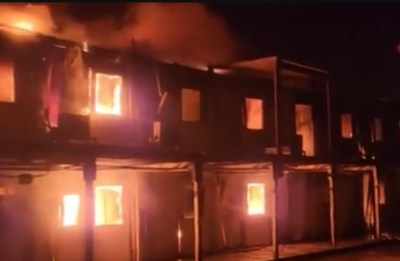
The escalating conflict between Afghanistan and Pakistan has entered a deeply alarming phase after a Pakistan military airstrike struck a drug rehabilitation center in Kabul, leaving scenes of devastation and a potentially staggering loss of life.
Initial reports indicate that hundreds may have been killed. Some agencies suggest that the death toll could reach 400, although the full scale of the tragedy remains unclear as rescue workers continue to search through the ruins. Even so, the brutality of the strike is already evident, and the psychological trauma inflicted upon survivors and families is immeasurable.
Sharafat Zaman Amarkhail, a spokesman for the Afghan Health Ministry, told the BBC that no military facilities existed in the vicinity of the strike. Taliban officials also claim that roughly 2,000 people were undergoing treatment for drug addiction at the rehabilitation center at the time of the attack.
Pakistan rejects these accusations, insisting that its air operations were precise and carefully conducted to avoid civilian casualties. Officials in Islamabad argue that the Taliban are misrepresenting the facts surrounding the incident.
However, images circulating on social media and early reporting from the scene suggest a far darker reality. Journalists from the BBC reported seeing at least thirty bodies while covering the aftermath of the strike, reinforcing fears that the true number of casualties may be significantly higher.
The location itself carries a complex history. According to the BBC, the site was once a United States military base that later became a gathering point for drug users. When the Taliban returned to power in 2021, the area was transformed into a rehabilitation center intended to house addicts rounded up across the capital.
Few analysts believe Pakistan deliberately targeted a rehabilitation facility. Instead, the incident increasingly appears to reflect a catastrophic intelligence failure—an all too familiar tragedy in modern warfare where flawed information results in the deaths of civilians.
The strike also follows earlier accusations from the Taliban government that Pakistan carried out air attacks in civilian areas across Afghanistan. According to Taliban authorities, several civilians were killed and others injured in earlier strikes as the confrontation between the two neighbors entered its third week, raising fears of a wider and more destabilizing conflict.
Shortly before the latest escalation, Wang Yi, the foreign minister of China, urged both sides to exercise restraint and engage in direct dialogue, warning that tensions must not spiral further.
Yet global attention remains overwhelmingly fixed on the confrontation involving Israel, the United States, and Iran. As a result, the deteriorating crisis along the Afghan-Pakistani frontier has received comparatively limited international scrutiny.
This neglect reflects a broader pattern in global affairs. From the violence in the Democratic Republic of the Congo to the turmoil in Myanmar, and from the insurgency in Northern Mozambique to the persistent instability in Somalia, many devastating conflicts continue to unfold largely outside the world’s spotlight.
At the center of the dispute is Pakistan’s claim that Afghan authorities have failed to control militants linked to Tehreek-i-Taliban Pakistan (TTP), a group responsible for numerous attacks inside Pakistan. Kabul strongly rejects this accusation, arguing that Afghanistan should not be blamed for Pakistan’s internal security problems.
Meanwhile, Volker Türk, the United Nations High Commissioner for Human Rights, warned that “the cycle of retaliation and violence only deepens the suffering of the wider population.”
If the current trajectory continues, the consequences will extend far beyond the battlefield. For millions of ordinary people already trapped in poverty and instability, the escalating conflict threatens to deepen hardship and suffering.
The tragedy in Kabul should therefore serve as a stark warning. Without urgent diplomacy and genuine dialogue, the violence risks spiraling further—leaving yet more innocent lives shattered in a conflict that the world is barely watching.
One can only hope that out of this devastating episode both Afghanistan and Pakistan step back from the brink and pursue dialogue before the cycle of retaliation produces even greater tragedy.

Modern Tokyo News is part of the Modern Tokyo Times group
http://moderntokyotimes.com Modern Tokyo Times – International News and Japan News
http://sawakoart.com – Sawako Utsumi’s website and Modern Tokyo Times artist
https://moderntokyonews.com Modern Tokyo News – Tokyo News and International News
PLEASE JOIN ON TWITTER
https://twitter.com/MTT_News Modern Tokyo Times
PLEASE JOIN ON FACEBOOK
 Modern Tokyo News