UAE Dealing With Iran’s Military Aggression (Gulf Powers and Trump)
Hiroshi Saito, Michiyo Tanabe, and Lee Jay Walker
Modern Tokyo Times
The continuing conflict involving America and Israel against Iran is entering an increasingly volatile phase, marked by profound and widening convulsions. Of particular concern for the Gulf nations is Iran’s expanding military posture, now being forcefully unleashed against regional states. Consequently, through numerous internal political channels with Washington, Bahrain, Kuwait, Saudi Arabia, and the United Arab Emirates (UAE) are collectively urging America to sustain its military campaign until fundamental and far-reaching changes occur within Iran.
Oman and Qatar, however, maintain a more nuanced stance despite their anger over Iran’s actions. Prior to the conflict, Qatar and Iran shared distinctive ties, especially during the rift between Saudi Arabia and Qatar several years ago—now largely resolved. Meanwhile, Oman continues to advocate a middle path, consistently emphasizing dialogue and diplomacy even amid intensifying tensions.
AP News reports: “All the while, Trump is struggling to rally public support at home for a war that’s left more than 3,000 dead across the Middle East and is shaking the global economy. Yet the U.S. leader is sounding increasingly confident that he has the full support of his most important Middle East allies — including some that were hesitant about a new military campaign in the lead-up to the war.”
President Trump of America stated: “Saudi Arabia’s fighting back hard. Qatar is fighting back. UAE is fighting back. Kuwait’s fighting back. Bahrain’s fighting back… They’re all fighting back.”
It remains uncertain whether one or more Gulf nations will ultimately initiate direct military operations should Iran persist in striking regional targets. Much will depend on how the conflict evolves and whether any party seeks a viable off-ramp. At present, however, America appears to be intensifying its military presence in the region while simultaneously escalating its demands on Tehran.
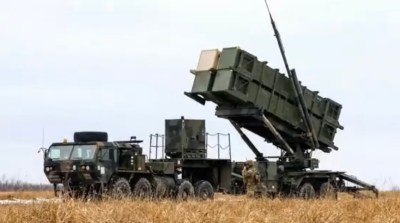
Turning to the UAE, the country’s air defense architecture—supported by advanced technology, rigorous training, and seamless coordination with trusted allies—has demonstrated striking resilience and operational effectiveness.
These outcomes underscore the formidable capabilities of the UAE’s armed forces and their high degree of professionalism. The performance of its integrated air defense network—strengthened by sophisticated systems, intelligence-sharing, and close cooperation with partners such as the United States—reveals a disciplined and technologically advanced force capable of safeguarding the nation under sustained and extreme pressure.
Iran’s drone campaign has proven overwhelmingly ineffective against the UAE’s vigilant defenses. Despite 1,914 drones launched toward UAE targets since the conflict began, only a small fraction have penetrated its defenses. Consequently, the death toll stands at eight—tragic losses, yet remarkably limited given the scale and intensity of the attacks.
Similarly, Iran’s 414 ballistic missiles directed at the UAE have, on the whole, failed to achieve decisive impact due to the robustness of the country’s air defense systems, notwithstanding some damage. A limited number of cruise missiles have also been deployed. However, in the economic sphere, the closure of the Strait of Hormuz, attacks on Emirates Global Aluminium, disruptions to regional airlines, and other critical factors are generating significant negative convulsions.
The National reports: “The UAE has faced daily missile and drone attacks from Iran since the war broke out. Iran has attacked the Emirates and other Gulf states in response to strikes launched by the US and Israel on February 28.”
Through its widening military campaign across the Gulf, Iran risks deepening its regional isolation. States that once sought to balance diplomacy with caution are increasingly aligning in opposition to Tehran’s destabilizing actions, reinforcing a collective determination to uphold regional security and stability.
Hence, while European NATO powers have offered limited support to America, many Gulf nations now appear to view substantive political and military change within Iran as a viable—if stark—path toward reducing long-term instability. In this, they see the potential to diminish a major and enduring source of tension across West Asia.

Modern Tokyo News is part of the Modern Tokyo Times group
http://moderntokyotimes.com Modern Tokyo Times – International News and Japan News
http://sawakoart.com – Sawako Utsumi’s website and Modern Tokyo Times artist
https://moderntokyonews.com Modern Tokyo News – Tokyo News and International News
PLEASE JOIN ON TWITTER
https://twitter.com/MTT_News Modern Tokyo Times
 Modern Tokyo News