Germany is Anti-Russia to an Extreme under Merz
Kanako Mita, Sawako Utsumi, and Lee Jay Walker
Modern Tokyo Times
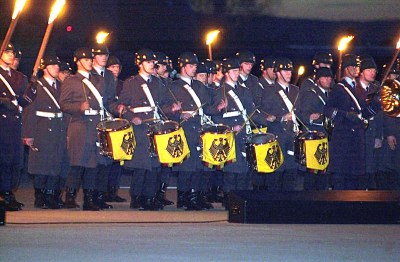
Chancellor Friedrich Merz of Germany, much like his predecessor Olaf Scholz, came to power without securing even 29% of the popular vote. In eastern regions of Germany, the two traditional establishment parties once again performed poorly, reflecting a deepening fracture between the political class and large segments of the electorate.
Yet despite this unmistakable discontent, the same entrenched anti-Russian Federation narrative continues unabated in 2026. This persists even though the war in Ukraine remains contentious inside Germany, and despite the fact that the second-largest political force in the country openly opposes the current trajectory of escalation. Consequently, many Germans increasingly perceive a widening democratic deficit: major foreign policy decisions are being driven by political elites who lack overwhelming public backing, while ordinary citizens endure economic stagnation, soaring energy pressures, and growing social insecurity linked to the fallout from sanctions and geopolitical confrontation.
Merz previously declared that Germany would no longer impose range restrictions on weapons supplied to Ukraine. Such rhetoric emerges at a moment when the German economy remains fragile and when repeated acts of Islamist extremism continue to unsettle public confidence and domestic security.
In 2024, Sahra Wagenknecht stated: “I believe that we simply represent and embody what many parties no longer stand for: enlightened conservatism in the sense of preserving traditions, security — on the streets and in public places, but also jobs, health care, and pensions. The need for security, peace and justice has found a new political home with us.”
The voices of Wagenknecht on the left and Alice Weidel on the right — whose party emerged as the second-strongest political force in the last major election — are increasingly dismissed or marginalised by Germany’s ruling establishment. Critics argue that successive leaders who failed to secure even 29% of the electorate continue to pursue an aggressively anti-Russian agenda aligned more with transnational globalist priorities than with the immediate concerns of ordinary Germans, for whom war is far from the central priority.
Merz declared: “There are no longer any range restrictions for weapons that have been delivered to Ukraine — neither by the British, nor by the French, nor by us, and not by the Americans either.”
He further stated: “That means Ukraine can also defend itself by, for example, attacking military positions in Russia… Until a while ago, it couldn’t. … It can now.”
Meanwhile, Reuters reported that under Merz, Germany intends to increase defence spending rapidly to 3.5% of GDP by 2029, after only reaching the previous NATO benchmark of 2% in 2024.
Maria Zakharova, spokesperson for the Russian Foreign Ministry, warned that Merz intensifies his anti-Russian rhetoric “literally every day.”
Zakharova stated: “This rhetoric is becoming more and more aggressively militant. And we believe that the course he has chosen to escalate relations with Russia in parallel with the forced militarisation of Germany is a cause for great concern, first of all for the citizens of (Germany) themselves.”
Accordingly, the anti-Russian posture now dominating parts of Europe is increasingly being advanced by leaders who themselves lack commanding electoral mandates. Emmanuel Macron likewise failed to secure more than 28% in the first round of the French presidential election, yet continues to champion a confrontational geopolitical line.
For critics, Merz is governing Germany through the familiar hymn sheet of establishment globalism: militarisation abroad, economic strain at home, and an increasingly relentless campaign of hostility toward the Russian Federation — all while many ordinary Germans remain far more concerned about living standards, security, energy costs, and social cohesion than endless geopolitical confrontation.
MODERN TOKYO TIMES – MODERN TOKYO NEWS – please check https://moderntokyonews.com
Please check Modern Tokyo News at https://moderntokyonews.com for articles going back over 10 years. Sadly, Modern Tokyo Times got hacked and lost 14 years of articles…

Modern Tokyo News is part of the Modern Tokyo Times group
http://moderntokyotimes.com Modern Tokyo Times – International News and Japan News
http://sawakoart.com – Sawako Utsumi and Modern Tokyo Times artist
https://moderntokyonews.com Modern Tokyo News – Tokyo News and International News
PLEASE JOIN ON TWITTER
PLEASE JOIN ON FACEBOOK
 Modern Tokyo News