Iran Kills Its Youth: State Tyranny (Nika Shakarami) Continues
Murad Makhmudov, Noriko Watanabe, and Lee Jay Walker
Modern Tokyo Times
The shadow cast by the Iranian Revolution of 1979 continues to stretch across generations, its weight borne most brutally by the young — especially women whose only “crime” is the yearning to breathe freely in their own lives. The promise of revolution has long since hardened into a machinery of fear, one that consumes its daughters to preserve itself.
In recent years, names like Mahsa Amini, Sarina Esmailzadeh, Hadis Najafi, and Nika Shakarami have become more than individuals — they are symbols of a generation that refused silence. Their lives, cut short, illuminate a grim truth: that the state, in its desperation to extinguish dissent, has turned its full force against the spirit of youth.
The protests of 2022, known globally as the Woman, Life, Freedom Movement, were not born of ideology alone, but of accumulated suffocation — economic hardship, social repression, and the daily erosion of dignity. In response, the state answered not with reform, but with blood. Hundreds were killed; thousands imprisoned; countless more silenced through intimidation, surveillance, and force.
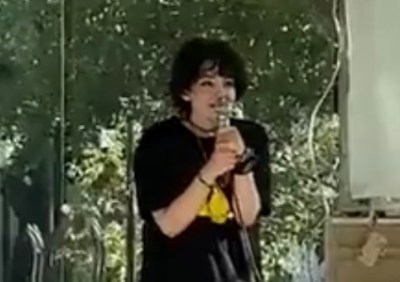
The case of Nika Shakarami remains particularly haunting. Reports, including investigations by the BBC, describe a chilling sequence of pursuit, abuse, and death—an alleged act of violence so severe that it echoes far beyond Iran’s borders. Her story is not isolated; rather, it is emblematic of a system that fears even the smallest spark of defiance.
This pattern of repression is not new. During the 1980s, in the aftermath of the revolution’s consolidation, even insiders like Hussein-Ali Montazeri raised alarm, writing to Ruhollah Khomeini about atrocities committed within the prison system. His warning — that young women were subjected to unimaginable abuses—revealed a truth that has never fully disappeared, only evolved in form.
And yet, beyond Iran’s borders, the response remains uneven, at times muted, at times entangled in geopolitical calculation. Institutions such as the United Nations become arenas where principles of human rights are weighed against diplomacy, alliances, and expediency. For those watching from within Iran, this distance can feel like abandonment.
Still, what authoritarian systems often fail to understand is this: repression can bury bodies, but it cannot extinguish memory. The voices of Nika, Mahsa, Sarina, Hadis, and countless unnamed others continue to echo in 2026 — not only in protests, but in quiet acts of defiance, in whispered conversations, in the refusal to forget.
Nika’s mother spoke not only of loss, but of generational rupture — a line crossed by a daughter who would not accept the compromises of the past. That courage, once awakened, is difficult to contain.
Even under the cover of fear, even amid the uncertainty of 2026 and the ongoing war, something endures. The light carried by these young women has not been extinguished. It has been scattered —across cities, across generations, across the hearts of millions who still dare to imagine a different Iran.
And that, perhaps, is what the machinery of repression fears most.
Hence, shame on nations who continue to ignore the plight of ordinary Iranians at the hands of state tyranny.

Modern Tokyo News is part of the Modern Tokyo Times group
http://moderntokyotimes.com Modern Tokyo Times – International News and Japan News
http://sawakoart.com – Sawako Utsumi’s website and Modern Tokyo Times artist
https://moderntokyonews.com Modern Tokyo News – Tokyo News and International News
PLEASE JOIN ON TWITTER
https://twitter.com/MTT_News Modern Tokyo Times
PLEASE JOIN ON FACEBOOK
 Modern Tokyo News