Israel Kills Iranian Elites (Contained by America) – Lebanon
Noriko Watanabe, Hiroshi Saito, and Lee Jay Walker
Modern Tokyo Times

Prime Minister Benjamin Netanyahu of Israel and President Donald Trump of the United States are no longer intensifying their coordinated military pressure against Iran because of the shifting impulses and calculations of Trump. Prior to Trump’s renewed pursuit of compromise with Tehran, Israel had significantly expanded its campaign of targeted assassinations against senior Iranian figures — reaching from the upper echelons of power surrounding Ali Khamenei to more recent figures such as Majid Khademi, the Intelligence Chief of the Revolutionary Guards.
The latest elimination of a high-ranking figure last month reinforced the growing perception that the Israel Defense Forces (IDF) retains the capability to penetrate, destabilize, and dismantle Iran’s theocratic, political, military, and intelligence hierarchy with extraordinary precision. In turn, this exposes a profound imbalance: while Iran’s internal security apparatus exerts sweeping control over its own population, it appears markedly less capable of protecting its leadership from external infiltration and lethal reach.
According to reporting by The New York Times, “Israel has killed a number of Iran’s most senior officials, including Ayatollah Ali Khamenei, the former supreme leader, and Ali Larijani, a top national security official who had effectively been running Iran.” This assessment underscores both the depth and strategic intent underpinning Israel’s campaign against Iran’s ruling establishment.
Israel’s Defense Minister, Israel Katz, had made the policy explicit before recent pressure from Trump, vowing that operations would continue unabated. His stark declaration — that Israel would “hunt them down, one by one” — signaled a doctrine of sustained decapitation strikes directed against the pillars of Iran’s ruling order. The fact that Khademi’s predecessor was also eliminated further demonstrates that no position within Iran’s power architecture appears insulated under current conditions. Consequently, Tehran welcomes Trump’s current posture, recognizing that Israel seeks not merely containment, but long-term regime destabilization and potential regime change — in contrast to the increasingly inconsistent and compromise-driven posture emerging from Washington under Trump.
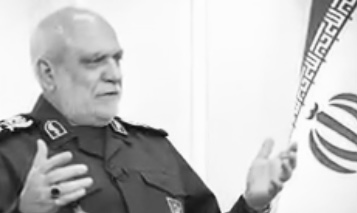
Additional reporting from The Jerusalem Post noted that numerous senior officials within the Revolutionary Guards and Iran’s Intelligence Ministry were assassinated in late February and the weeks that followed, even as some — including Khademi — temporarily evaded earlier assassination attempts.
Beyond Iran itself, Israel had also widened its operational campaign in southern Lebanon against Hezbollah, widely regarded as Iran’s most powerful regional proxy. Strategic infrastructure, including bridges over the Litani River allegedly used for logistical and military movement, had been struck repeatedly. Yet Israel is presently restraining and calibrating its military operations in part to placate Washington, effectively pausing aspects of a broader strategy that many within Israel believe was degrading Hezbollah’s operational freedom. Among sections of Israeli society and the security establishment, there is growing frustration that Hezbollah may exploit this breathing space to regroup, rearm, and consolidate.
Israel’s objective remains the creation of a secure buffer zone capable of protecting its northern communities from future attacks. While Beirut condemns Israeli incursions, the deeper structural crisis resides within Lebanon itself — where Hezbollah, as an armed non-state actor, continues to operate beyond the full authority of the Lebanese state. Despite repeated official promises to consolidate sovereign control, Hezbollah has shown no genuine willingness to disarm. Consequently, critics argue that Israel’s current reduction in military pressure neither advances the strategic interests of Tel Aviv nor serves many Lebanese citizens outside Hezbollah’s orbit who seek “a single army” and a sovereign government free from Iranian influence.
For Lebanon, already devastated by economic collapse, institutional paralysis, and social fragmentation, continued entanglement in the wider confrontation involving Washington, Tel Aviv, and Tehran is becoming increasingly unsustainable. The country’s fragile sectarian equilibrium requires restraint, national cohesion, and institutional recovery — not unilateral military entanglements tied to external ideological and geopolitical agendas.
Ultimately, Lebanon’s future must be determined by the Lebanese people themselves rather than shaped as an extension of Iranian regional ambitions. Hezbollah now faces a defining crossroads: integrate fully into the national framework and contribute to stabilizing a faltering state, or continue along a trajectory that risks perpetual instability, deeper isolation, and potentially its own long-term destruction.
In parallel, Israel’s broader strategic objective remains unmistakably clear despite current pressure from Trump to scale back operations: systematically degrading Iran’s leadership networks while constraining and weakening its regional proxies — from Lebanon to the Gaza Strip. Accordingly, Trump’s recent efforts to pursue accommodation and compromise with Iran are increasingly viewed by many in Israel as directly undermining the military and strategic objectives that Israel believes are necessary for its long-term security.

Modern Tokyo News is part of the Modern Tokyo Times group
http://moderntokyotimes.com Modern Tokyo Times – International News and Japan News
http://sawakoart.com – Sawako Utsumi’s website and Modern Tokyo Times artist
https://moderntokyonews.com Modern Tokyo News – Tokyo News and International News
PLEASE JOIN ON TWITTER
https://twitter.com/MTT_News Modern Tokyo Times
 Modern Tokyo News