Syria Remains Fragile – Religious Persecution
Murad Makhmudov, Noriko Watanabe, and Lee Jay Walker
Modern Tokyo Times
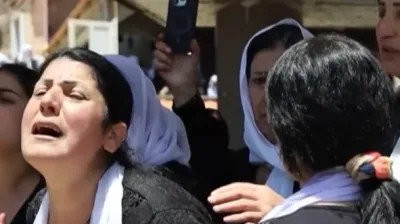
President Donald Trump of the United States and leading European Union nations – alongside influential Gulf Arab states and Turkey – continue to extend diplomatic legitimacy and political support to the new Sunni Islamist power structure in Damascus, even as mounting evidence points to systematic abuses against Syria’s religious minorities and the treatment of women deteriorates. The result is a volatile and increasingly sectarian landscape in which ancient communities face renewed persecution, while geopolitical expediency is prioritized over human security and accountability.
In Sweida (Suweida), tensions between the Druze population and local Sunni Bedouin groups remain – along with the intrigues of Islamists in Damascus. The situation deteriorated dramatically (earlier last year) after Sunni Islamist militants advancing from Damascus carried out brutal massacres against Druze civilians. Eyewitness accounts described scenes of extraordinary brutality, with entire families reportedly wiped out and sectarian rhetoric used to justify the killings.
Numerous reports indicate that Druze civilians were executed by forces loyal to Islamist factions aligned with the emerging authorities in Damascus who rule by brute force. According to the Syrian Observatory for Human Rights (SOHR), Druze civilians were shot, beheaded, abducted, and subjected to coordinated attacks. The death toll reached alarming levels, underscoring how minority populations have become expendable pieces in Syria’s evolving geopolitical chessboard.
The same militant networks have also been implicated in the massacre of approximately 1,700 Alawites, targeted because of their communal identity by Sunni Islamist elements linked to circles now exercising influence in Damascus. When viewed alongside documented attacks against Christian, Druze, and other minority communities, a disturbing pattern emerges. The issue is no longer isolated violence but the gradual construction of a sectarian order in which non-Sunni populations exist in a state of permanent insecurity. The specter of ISIS, Al-Qaeda, and related jihadist movements continues to hover over Syria, exploiting instability while regional and international powers pursue strategic objectives of their own.
Israel’s Foreign Minister, Gideon Sa’ar, issued a stark warning: “It is very dangerous to belong to a religious minority in Syria. This has been proven time and again over the past six months.”
He further stated: “The international community must ensure the security and rights of the minorities in Syria before these communities disappear altogether.”
His warning extends beyond humanitarian concern. It reflects growing fears that Syria may be entering a new phase in which sectarian majoritarianism replaces the pluralistic traditions that once distinguished the country. For Israel, the issue is not merely moral but strategic. The emergence of an unstable Sunni Islamist order on its northern frontier creates profound security uncertainties, particularly if extremist factions become entrenched within the new political framework.
Yet despite repeated warnings, Washington, Brussels, London, Ankara, and several Gulf capitals appear increasingly willing to accommodate Sunni Islamist power brokers in Damascus. The calculation is straightforward: weaken Iranian influence, reshape Syria’s geopolitical alignment, and secure a measure of regional stability. However, this strategy risks empowering forces whose ideological foundations remain deeply hostile to pluralism, secularism, and minority rights.
Religious minorities and secular Syrians – once central pillars of Syria’s social fabric – are increasingly marginalized. Their security concerns are often treated as secondary considerations within larger diplomatic negotiations aimed at restructuring regional power balances.
Meanwhile, Kurdish leaders in northern Syria watch these developments with growing apprehension. Having served as one of the most effective ground forces against ISIS, many Kurdish officials fear they are witnessing the emergence of a familiar pattern: Western powers relying upon local allies during times of conflict only to abandon them once geopolitical priorities shift. The prospect of a strengthened Islamist-led Damascus raises concerns that Kurdish autonomy (also shattered last year), political representation, and security guarantees will eventually become bargaining chips in broader regional negotiations.
The pressure being applied by Washington and other international actors upon Israel to normalize relations with Damascus reflects a wider strategic objective. The United States seeks to draw Syria away from Iran, integrate it into a new regional architecture, and reduce long-term instability. Yet such diplomatic ambitions carry significant risks if they proceed without meaningful protections for vulnerable populations.
The Druze community within Israel is unlikely to remain indifferent. Bound by history, faith, family ties, and communal solidarity to the Druze of Sweida, many Israeli Druze view the violence against their brethren as a direct challenge that cannot simply be overlooked for the sake of diplomatic convenience. Consequently, pressure is likely to intensify upon the Israeli government to hold Sunni Islamist power brokers in Damascus accountable for attacks against Druze civilians.
America seeks to broker a historic understanding between Israel and Syria. However, any agreement that ignores the security concerns of the Druze and other vulnerable communities risks being built upon unstable foundations. Strategic realignment cannot come at the expense of those facing persecution on the ground.
Reuters reports: “The U.S. plans for the presence in the Syrian capital, which have not previously been reported, would be a sign of Syria’s strategic realignment with the U.S. following the fall last year of longtime leader Bashar al-Assad, an ally of Iran.”
This observation highlights the broader geopolitical reality driving current policy. Syria is increasingly being viewed through the lens of great-power competition, regional realignment, and the struggle to contain Iranian influence. Within that framework, the plight of minorities risks becoming a secondary concern.
The United States, the European Union, Gulf states, Turkey, and the United Kingdom present themselves as defenders of democracy, human rights, and religious freedom. Yet their willingness to engage with and legitimize Sunni Islamist authorities accused of sectarian abuses raises difficult questions about consistency and credibility. Critics argue that strategic calculations have eclipsed moral considerations, producing a policy that prioritizes geopolitical gains over the protection of vulnerable populations.
The stakes extend far beyond Syria itself. If the international community signals that sectarian violence can be overlooked when politically convenient, it establishes a dangerous precedent across the Middle East. Such a message would embolden extremists, weaken moderate voices, and further undermine confidence among minority communities already questioning whether international guarantees carry any real meaning.
Religious minorities, secularists, Kurds, and other vulnerable populations now confront an increasingly uncertain future under the tightening influence of Sunni Islamist forces in Damascus. Churches, Druze shrines, Alawite neighborhoods, secular institutions, and diverse communal traditions that survived more than a decade of war may struggle to survive the next phase of Syria’s transformation.
Thus the central question remains cold, unavoidable, and profoundly geopolitical: why are major international powers prepared to risk the destruction of Syria’s historic religious mosaic in pursuit of strategic realignment? And if Syria’s minorities are sacrificed for geopolitical expediency today, what confidence can any vulnerable community have in the promises of the international order tomorrow?

Modern Tokyo News is part of the Modern Tokyo Times group
http://moderntokyotimes.com Modern Tokyo Times – International News and Japan News
http://sawakoart.com – Sawako Utsumi and her website – Modern Tokyo Times artist
https://moderntokyonews.com Modern Tokyo News – Tokyo News and International News
PLEASE JOIN ON TWITTER
PLEASE JOIN ON FACEBOOK
 Modern Tokyo News