Iran Closes Strait of Hormuz: Israel Fears Trump U-turn
Noriko Watanabe, Michiyo Tanabe, and Lee Jay Walker
Modern Tokyo Times
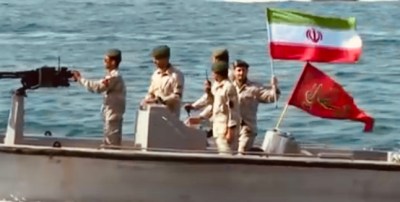
It initially appeared that the Israel Defense Forces (IDF) and the Israeli Air Force (IAF), acting in concert with the armed forces of the United States, were committed to a sustained strategy designed to contain Iran by steadily eroding the foundations of its military power. Yet Donald Trump now seems to be recalibrating — much to Israel’s unease — by pursuing a deal with Tehran that falls far short of regime change or offering reassurance to Gulf states wary of Iran’s reach across Iraq, Lebanon, and Yemen.
At the outset, the objective appeared unequivocal: to compel Tehran into terms aligned with the strategic interests of Washington and Jerusalem. In parallel, Israel intensified operations against Hezbollah, seeking to dismantle Iran’s most formidable regional proxy and sever a crucial extension of its influence in the Levant.
Now, however, Trump appears to be pivoting toward compromise, even urging Israel to scale back its campaign against Hezbollah in Lebanon. This shift has unsettled Gulf powers such as Saudi Arabia and the United Arab Emirates, which continue to feel exposed to Iranian pressure despite the recent escalation.
The diplomatic façade between Washington and Tehran fractured after 21 hours of tense deliberations in Pakistan. U.S. Vice President JD Vance swiftly pointed to “shortcomings” in the talks — language that signaled not merely disappointment, but a widening strategic divide. At the heart of the impasse lay Iran’s refusal to abandon its nuclear ambitions, a stance that continues to threaten the geopolitical balance of West Asia.
Vance framed the breakdown in stark terms: “It’s bad news for Iran much more than it’s bad news for the United States of America. So we go back to the United States having not come to an agreement.”
He further underscored the core concern: “The question is, ‘Do we see a fundamental commitment of will for the Iranians not to develop a nuclear weapon not just now, not just two years from now but for the long term?’ We haven’t seen that yet, we hope we will.”
Trump’s U-turn
Despite this rhetoric, Trump now appears inclined toward a diluted compromise — one that leaves Iran’s regional “tentacles” largely intact. For Tehran, this represents a strategic reprieve, preserving its capacity to project influence across multiple fronts.
Initially, Trump escalated tensions following the failed talks, asserting that U.S. naval forces were clearing mines in the Strait of Hormuz — a vital corridor through which roughly 20% of global LNG and oil supplies pass. Any misstep in this narrow passage risks immediate and far-reaching consequences, particularly given Iran’s longstanding insistence that the strait is a non-negotiable red line.
This was followed by moves toward a U.S.-led blockade of the waterway, effectively targeting a critical economic lifeline for Iran. Yet Tehran responded defiantly, once again closing the strait and calling Washington’s bluff.
According to Associated Press, “The standoff over the Strait of Hormuz escalated again Saturday as Iran reversed its reopening of the crucial waterway and fired on ships attempting to pass, in retaliation after the United States pressed ahead with its blockade of Iranian ports.”
The naval arm of the Islamic Revolutionary Guard Corps issued a stark warning, declaring that until the blockade is lifted, “no vessel should make any movement from its anchorage in the Persian Gulf and the Sea of Oman, and approaching the Strait of Hormuz will be considered as cooperation with the enemy” — and thus a legitimate military target.
Reporting from The Guardian added that “a UK maritime agency reported that Islamic Revolutionary Guard Corps (IRGC) ships had fired at a tanker as it attempted to pass through the strait on Saturday. Reuters reported an Indian-flagged vessel carrying crude oil had also been attacked while in the waterway.”
With a fragile ceasefire set to lapse on Wednesday, both Washington and Tehran claim a form of “victory,” albeit an incomplete one. Yet beyond tentative signals that further talks may occur, a durable peace remains elusive. Military tensions appear poised to resume — unless Trump pivots further, risking the perception of abandoning Israel’s campaign against Hezbollah.
CNN captured the uncertainty succinctly: “After a brief hope that one of the world’s busiest waterways might reopen, United States and Iran appear to agree on very little beyond – maybe – being prepared to meet again.”
Iran, for its part, seeks to preserve its network of proxy forces across Iraq, Lebanon, and Yemen, while maintaining leverage over the Strait of Hormuz. Israel remains determined to dismantle Hezbollah and ultimately curtail Hamas in Gaza, with many in Jerusalem favoring regime change in Tehran. Meanwhile, the Trump administration appears caught between maximalist threats — such as large-scale strikes on Iranian infrastructure — and the pursuit of a negotiated compromise.
For Gulf states, the status quo is untenable. The prospect of an emboldened Iran — capable of exerting both economic and military pressure — remains a source of deep anxiety in Riyadh and Abu Dhabi alike.
As Iran projects confidence in the current climate, the path forward remains uncertain. Whether the United States escalates militarily alongside Israel, or Trump deepens his diplomatic pivot, will shape the next phase of a crisis defined by competing — and fundamentally irreconcilable — strategic aims.

Modern Tokyo News is part of the Modern Tokyo Times group
http://moderntokyotimes.com Modern Tokyo Times – International News and Japan News
http://sawakoart.com – Sawako Utsumi’s website and Modern Tokyo Times artist
https://moderntokyonews.com Modern Tokyo News – Tokyo News and International News
PLEASE JOIN ON TWITTER
https://twitter.com/MTT_News Modern Tokyo Times
 Modern Tokyo News