Mali and JNIM Islamists: Sahel Crisis
Boutros Hussain, Michiyo Tanabe, and Lee Jay Walker
Modern Tokyo Times
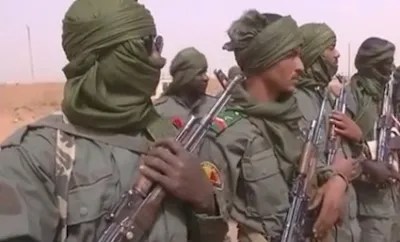
The Sahel region has endured prolonged upheaval for many years. Yet the internal political convulsions shaking Burkina Faso, Mali, and Niger — revolving around democracy, military rule, Islamist insurgency, ethnic tension, and entrenched cronyism —now appear to be eroding the very fabric of these nations to an even greater degree.
The Rise of the Alliance of Sahel States
Burkina Faso, Mali, and Niger have rejected the geopolitical authority of ECOWAS (Economic Community of West African States)while simultaneously pushing back against France’s colonial legacy and longstanding influence in the region. In response, the three nations formed the Alliance of Sahel States and demanded the withdrawal of French armed forces.
Initially, this new alliance generated a sense of momentum, sovereignty, and regional independence. However, despite these aspirations, Islamist forces increasingly appear to be exploiting the instability and security vacuums that have accompanied the geopolitical realignment.
Islamist Expansion in Mali
In Mali, both the Islamic State Sahel Province (ISSP) and the more powerful Jama’at Nusrat al-Islam wal-Muslimin (JNIM) have intensified their campaigns against the state. These groups are enforcing fuel and economic blockades targeting Bamako and other strategically important areas.
Unlike previous years, when anti-government forces were largely concentrated in northern and central Mali, JNIM’s influence is now expanding southward and westward, bringing the insurgency dangerously closer to the capital.
The group’s power bases in northern and central Mali have enabled it to disrupt vital commercial arteries linking Mali with Senegal and Côte d’Ivoire. By targeting fuel convoys and trade routes, the insurgents have exacerbated fuel shortages and increased living costs for ordinary Malians. Consequently, public hardship is deepening while confidence in the central government continues to erode.
Strategic Surprise and the Death of Mali’s Defense Minister
Against this deteriorating backdrop, coordinated attacks by Islamist and Tuareg forces achieved what had increasingly appeared possible: a strategic surprise against Mali’s military leadership and their Russian paramilitary partners from the Kremlin-controlled Africa Corps.
The scale of the offensive was striking. According to the Russian Africa Corps, attacks launched in late April reportedly involved at least 12,000 insurgents. Rather than merely probing military defenses, the insurgents struck with considerable force, culminating in the death of Defense Minister Sadio Camara during the offensive.
The killing of such a senior figure highlighted a significant breach at the highest levels of state security and underscored the growing capabilities of anti-government forces. Nevertheless, following the initial setbacks, Malian government forces—supported by the Russian Africa Corps—have managed to stabilize parts of the front and reclaim some territory.
The Russian Federation has stated that the Africa Corps will remain in Mali “to combat extremism, terrorism and other harmful phenomena and will continue to provide assistance to the current government.”
A State Within a State
Despite these efforts, JNIM increasingly operates as a state within a state across vast areas of Mali.
In territories under its control, the organization has imposed a rigid interpretation of Sharia law, replacing local governance structures and undermining traditional social systems. Consequently, Mali’s longstanding traditions of moderate Islam face mounting pressure from the Takfiri ideology promoted by both JNIM and ISSP.
The growing strength of these groups represents not merely a military challenge but also an ideological and societal threat to Mali’s diverse religious and cultural heritage.
A Regional Threat Beyond Mali
Developments in the Sahel are being monitored with growing concern by Benin, Côte d’Ivoire, Ghana, Mauritania, Senegal, and Togo. Their apprehension is understandable, given that instability in Mali increasingly carries implications for the wider region.
At the same time, the broader Lake Chad Basin remains a volatile center of Islamist militancy. Organizations originating in northern Nigeria — notably Boko Haram and the Islamic State West Africa Province (ISWAP) — have expanded their influence into Cameroon, Chad, and Niger.
Consequently, the spread of Takfiri Islamist movements continues to fuel insecurity across national borders, posing a grave and widening threat to regional stability throughout both West Africa and the Lake Chad region.
According to AP News, “Mali’s military has attempted to escort fuel trucks from border areas to Bamako while also targeting JNIM locations with airstrikes. Some trucks have made it to the capital, but others have been attacked by militants.”
The Tuareg Dimension
Alongside the Islamist insurgency, northern Mali continues to face challenges stemming from unresolved Tuareg grievances.
Many Tuareg communities maintain longstanding political, economic, and cultural concerns regarding their relationship with the central government. Accordingly, the recent military offensive launched by Tuareg forces caught Mali’s leadership by surprise and demonstrated that the country’s security crisis cannot be viewed solely through the lens of Islamist militancy.
The persistence of both separatist and Islamist challenges highlights the complexity of Mali’s security environment and the difficulty of achieving a lasting settlement.
The Need for Constructive International Engagement
It is incumbent upon the United States, ECOWAS, the European Union, and the G7 nations to engage constructively with Burkina Faso, Mali, and Niger through economic cooperation, developmental assistance, and carefully calibrated security support.
However, such engagement must be rooted in genuine dialogue and respect for the priorities, concerns, and sovereignty of these nations. External actors will achieve little if they fail to acknowledge the perspectives of governments and populations that increasingly seek independent paths forward.
Only by listening to local concerns and addressing specific security and developmental needs can the international community help contain terrorism, strengthen governance, and prevent further destabilization across the Sahel and Lake Chad regions.

Modern Tokyo News is part of the Modern Tokyo Times group
http://moderntokyotimes.com Modern Tokyo Times – International News and Japan News
http://sawakoart.com – Sawako Utsumi’s website and Modern Tokyo Times artist
https://moderntokyonews.com Modern Tokyo News – Tokyo News and International News
PLEASE JOIN ON TWITTER
PLEASE JOIN ON FACEBOOK
 Modern Tokyo News