Persecution in West Asia (Middle East)
Kanako Mita, Sawako Utsumi, and Lee Jay Walker
Modern Tokyo Times
The international gaze remains fixated — almost obsessively — on the Israeli–Palestinian conflict, as though it alone defines the suffering, instability, and injustice of West Asia (Middle East) and North Africa. Yet this singular fixation obscures a far wider and more savage landscape of ethnic cleansing, sectarian bloodshed, religious persecution, collapsing states, and geopolitical cynicism stretching from the Atlantic edge of North Africa to the mountains of Kurdistan.
The Kurds — the largest stateless ethnic group in the Middle East — remain trapped beneath the weight of four states: Iran, Iraq, Syria, and Turkey. Despite their ancient presence, distinct identity, and repeated sacrifices in regional wars, they remain denied true sovereignty, security, and lasting dignity. In NATO-member Turkey, Kurdish regions endure military operations, bombardments, political repression, and relentless pressure against Kurdish identity and language. In Iran and Syria, Kurds are frequently treated as internal enemies upon their own ancestral lands. Iraq praises Kurdish fighters when convenient —especially during the war against ISIS — only to marginalize or weaken them once political winds shift. The promises made to the Kurds by global powers dissolve almost as quickly as they are spoken.
Egypt, routinely portrayed internationally as a pillar of “moderation,” continues to marginalize its indigenous Coptic Christian population—the direct heirs of one of the world’s oldest civilizations. Beneath the rhetoric of coexistence lies a reality in which Copts often live under the shadow of Islamist majoritarianism and entrenched discrimination. During periods of political upheaval, churches have been torched, communities attacked, and accountability has remained painfully elusive. The insecurity is not always constant — but it is always present beneath the surface.
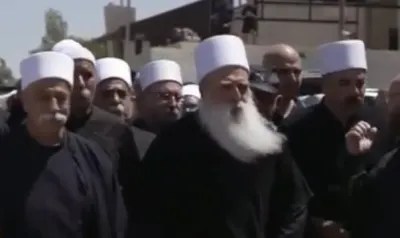
Syria reveals perhaps the clearest collapse of the simplistic Western narrative dividing the region into heroes and villains. The reality is far darker, far more fragmented, and drenched in sectarian brutality. Sunni Islamist militants have carried out massacres and pogroms against Alawites, Druze, Christians, and other minorities, executing civilians solely because of sect or faith. Entire communities have lived under the terror of extermination. Yet these atrocities rarely command sustained international outrage. Geopolitical convenience has too often replaced moral consistency, while minorities are abandoned amid the wreckage of ideological wars.
Meanwhile, ISIS may have lost its territorial caliphate, but its legacy of horror survives. Yazidi women and children abducted during the genocidal campaigns in Iraq remain missing, trafficked, or enslaved years after the world declared victory over the Islamic State. Iraq itself remains deeply fractured — a state in name, but increasingly a battleground for Iranian influence, militia power, sectarian division, and foreign interference. The Kurds, once celebrated globally as indispensable allies against ISIS, now watch their autonomy steadily eroded while Turkish airstrikes and regional power struggles continue to threaten their fragile position.
Religious minorities across Iraq — including Christians, Yazidis, Mandaeans, Shabaks, and others —continue to endure systematic discrimination, insecurity, and legal inequalities rooted in sectarian governance structures and religiously influenced legislation. For many, survival has become synonymous with emigration, demographic collapse, or quiet submission.
And beyond the obsessive spotlight cast upon Gaza and Jerusalem lies Sudan — a nation once again consumed by genocidal violence. In Darfur, Arab militias continue to slaughter Black African communities in scenes horrifyingly reminiscent of the atrocities that shocked the world in the early 2000s. Entire populations are uprooted, starved, or massacred while global attention drifts elsewhere. Sudan’s war is not merely political — it is tribal, racial, sectarian, and apocalyptic in its brutality. Cities crumble into ruins while civilians are sacrificed to warlords and competing factions.
Libya, once a functioning if authoritarian state, has degenerated into a shattered arena of militias, proxy wars, ideological extremism, and foreign manipulation. External powers carve out influence while ordinary Libyans endure lawlessness and collapse. Turkey’s interventionist role has been especially consequential, backing factions tied to political Islam while pursuing increasingly assertive regional ambitions. Ankara presents itself as a stabilizing force, yet its actions across Libya, Syria, and Kurdish territories often deepen polarization and conflict.
Yemen stands as one of the modern era’s great humanitarian catastrophes. The poorest country in the Arab world has become the battlefield for a ruthless regional cold war between Iran and Gulf monarchies. Sectarianism, tribal rivalries, famine, and foreign intervention have fused into a nightmare of starvation and endless war. Millions suffer while international actors continue to arm competing sides, treating Yemen less as a nation than as a geopolitical chessboard.
Lebanon — once celebrated as the cosmopolitan heart of the Levant — now trembles beneath economic collapse, sectarian fragmentation, demographic transformation, and political paralysis. The delicate Christian-Muslim balance that once underpinned the Lebanese state has steadily eroded under the pressures of corruption, regional conflict, refugee influxes, and militant politics. Meanwhile, minorities across the region increasingly find themselves abandoned by traditional allies and trapped between rival ideological forces.
Jordan appears comparatively stable, yet its stability remains precarious. Economic pressures, demographic tensions, refugee burdens, and dependence on external aid leave the kingdom walking a narrow tightrope above regional chaos. The illusion of permanence in the Middle East has repeatedly collapsed before; Jordan is not immune to the pressures consuming its neighbors.
And throughout this regional inferno, Turkey under President Recep Tayyip Erdoğan continues to project influence through a blend of nationalism, neo-Ottoman ambition, military intervention, and ideological alignment with Islamist movements. From northern Syria to Libya and beyond, Ankara’s policies increasingly shape the region’s balance of power—not always toward stability, but often toward deeper polarization and sectarian tension.
Thus, to equate “Middle East / West Asia peace” solely with resolving the Palestinian issue is not merely simplistic —it is profoundly misleading. It reduces an immense civilizational crisis into a single political dispute while obscuring countless other tragedies: genocides ignored, minorities erased, states hollowed out, sectarian wars normalized, and entire peoples abandoned.
From the blood-soaked plains of Darfur to the ruins of Aleppo, from the shattered mountains of Kurdistan to the starving streets of Taiz, the agony of the region extends far beyond one conflict. The Middle East and North Africa are enduring a multidimensional collapse involving ethnicity, religion, ideology, state failure, foreign intervention, and historical fragmentation.
Until the international community confronts the full map of suffering — rather than clinging to a single symbolic conflict as the prism through which all regional pain is viewed — the fires consuming the region will continue to spread, and countless forgotten peoples will remain trapped in the shadows of history.

Modern Tokyo News is part of the Modern Tokyo Times group
http://moderntokyotimes.com Modern Tokyo Times – International News and Japan News
http://sawakoart.com – Sawako Utsumi’s website and Modern Tokyo Times artist
https://moderntokyonews.com Modern Tokyo News – Tokyo News and International News
PLEASE JOIN ON TWITTER
https://twitter.com/MTT_News Modern Tokyo Times
PLEASE JOIN ON FACEBOOK
 Modern Tokyo News