Japanese Art and Aesthetics – Maruyama Ōkyo
Lee Jay Walker
Modern Tokyo Times
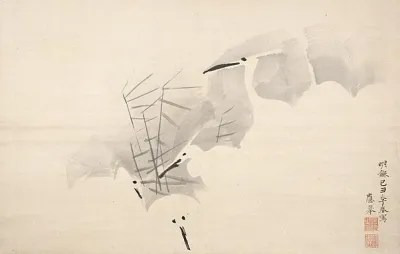
Maruyama Ōkyo (1733–1795) emerged as one of the most innovative and influential artists of the Edo period, leaving an enduring imprint on the trajectory of Japanese art. His genius rested in an eclectic artistic vision that fused traditional Japanese aesthetics, the refined principles of Chinese painting, and selective elements gleaned from limited exposure to Western artistic techniques. Through this synthesis, Ōkyo cultivated a striking realism that distinguished him from many of his contemporaries.
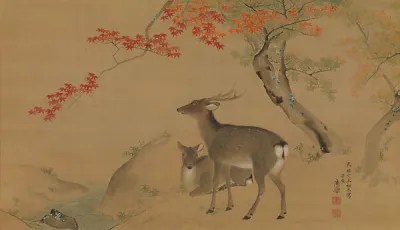
Reflecting on one of his celebrated works, the Metropolitan Museum of Art observes: “This painting was created in the tenth month of the lunar calendar — at the beginning of winter, when maple trees begin their transformation to brilliant crimson. Deer in Japanese poetry are connected with autumn, and these were painted with exacting detail; the texture of the fur has an almost tactile quality. The use of trees to frame the image echoes Kano-school conventions, while foliage and river elements reflect the ink-mottling technique (tarashikomi) used by Rinpa artists. The realism of the scene would have been a novelty to audiences at the time, but Maruyama Ōkyo handled the arrangement with subtlety. Contrasting this work with deer paintings by Yosa Buson (1716–1783) in the Literati mode allows us to see how radically Ōkyo departed from the idea of brushwork as the primary method of expression.”
Ōkyo’s artistic journey followed a natural progression from humble farming origins to formal study under the distinguished painter Ishida Yutei. Like his mentor, he embraced a broad and flexible approach to artistic expression rather than confining himself to rigid stylistic orthodoxy.
Central to Ōkyo’s legacy was his close observation of the natural world. Drawing deeply from the traditions of Chinese bird-and-flower painting while simultaneously grounding his work in Japanese aesthetics, he produced art that conveyed both technical precision and emotional subtlety. His paintings often carried an almost tactile realism, inviting viewers into scenes imbued with quiet elegance and natural harmony.
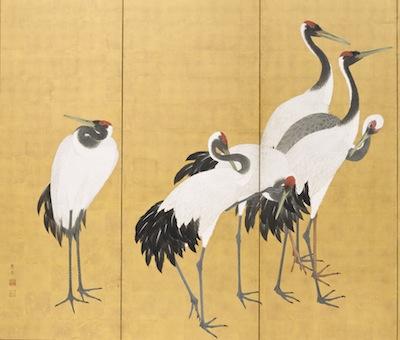
The Cleveland Museum of Art notes: “Okyo was the most influential painter and teacher of his time in Kyoto. His mastery of brush and ink found expression in a variety of Chinese and Japanese subjects, painting styles, and formats. This depiction of a heron on a willow branch is done in a classical Japanese painting (yamato-e) style, utilizing flat areas of colorful pigments set against an expansive background with little or no spatial depth.”
Through his innovative realism, technical mastery, and synthesis of diverse artistic traditions, Maruyama Ōkyo helped redefine the possibilities of Japanese painting, ensuring his place among the foremost cultural figures of the Edo era.

Modern Tokyo News is part of the Modern Tokyo Times group
http://moderntokyotimes.com Modern Tokyo Times – International News and Japan News
http://sawakoart.com – Sawako Utsumi’s website and Modern Tokyo Times artist
https://moderntokyonews.com Modern Tokyo News – Tokyo News and International News
PLEASE JOIN ON TWITTER
https://twitter.com/MTT_News Modern Tokyo Times
PLEASE JOIN ON FACEBOOK
 Modern Tokyo News