Taisho Period and Postcards by Uzaki Sumikazu (Children in Japan)
Lee Jay Walker
Modern Tokyo Times
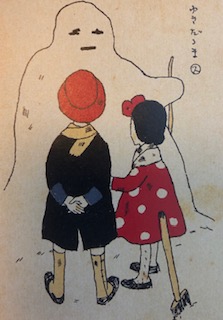
It is nigh impossible to grasp the true essence of any nation solely through the prism of art, archaeology, literature, or history books. Countless monuments across every continent conceal darker realities beneath their grandeur: the suffering of slaves, the burden of enforced labor, and the silent tragedies that unfolded in the shadows of celebrated civilizations. Beauty and brutality have often walked side by side throughout human history. Therefore, this fleeting glimpse into Japan during the late Meiji and Taishō eras — viewed through the gentle lens of postcards, children, and nostalgic imagery — can only ever be appreciated at face value, as one delicate fragment of a far more complex society.
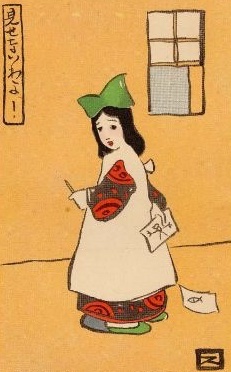
Yet the atmosphere conveyed in these charming postcards still reveals a Japan undergoing profound transformation. The liberal spirit within the imagery — including children eagerly awaiting Christmas festivities — reflects a social world remarkably different from the rigid hierarchies and restrained conventions of the Edo Period (1603–1868). Likewise, women in the rapidly modernizing urban centers appear to inhabit a society that, while far from equal, possessed greater freedoms and visibility than in earlier generations. Consequently, the postcards of the late Meiji Period (1868–1912) and the Taishō Period (1912–1926), created by the gifted artist Uzaki Sumikazu, provide a small but evocative window into a nation balancing tradition with modernity.
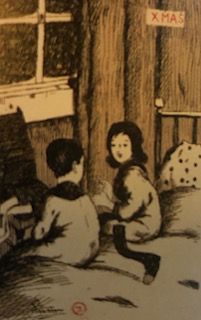
The Taishō era itself occupies a unique and often romanticized place in Japanese history. Emperor Taishō suffered greatly from poor health, increasingly withdrawing from public life and remaining distant from the political machinery of the age. Ironically, this detachment allowed democratic institutions and parliamentary culture to strengthen during his reign. Hence, historians often refer to this period as the age of “Taishō Democracy,” a brief yet fascinating interlude before the rise of militarism in the following decades.
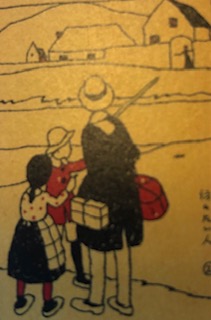
Within this cultural atmosphere, the postcards of Uzaki Sumikazu possess a particularly tender resonance. His works radiate warmth, innocence, and nostalgic serenity. The joyful anticipation of children awaiting Christmas festivities is especially enchanting, capturing moments of wonder that transcend time itself. Indeed, his popularity throughout the Kansai region stemmed largely from his affectionate portrayals of children and young women, rendered with remarkable sensitivity and emotional charm.
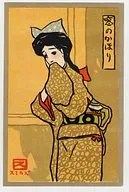
What makes Uzaki Sumikazu’s postcards so memorable is not merely their subject matter, but the atmosphere he created. Even ordinary daily scenes seem infused with a dreamlike glow — a subtle form of visual poetry where innocence softens the hardships of the modern world. His art evokes the comforting rhythm of another age: lantern-lit evenings, the quiet excitement of winter celebrations, and the fragile beauty of childhood memories suspended in time.

Therefore, although Uzaki Sumikazu is little known to many people today, his finest postcards continue to enchant modern audiences. Through their warmth, elegance, and nostalgic magic, they preserve small emotional truths about Taishō Japan — not the entirety of the era, but fleeting human moments that still speak gently across the decades.

Modern Tokyo News is part of the Modern Tokyo Times group
http://moderntokyotimes.com Modern Tokyo Times – International News and Japan News
http://sawakoart.com – Sawako Utsumi’s website and Modern Tokyo Times artist
https://moderntokyonews.com Modern Tokyo News – Tokyo News and International News
PLEASE JOIN ON TWITTER
https://twitter.com/MTT_News Modern Tokyo Times
PLEASE JOIN ON FACEBOOK
 Modern Tokyo News